What Is Hypoxylon Canker?
“This is exactly why I will be using Leaf Tree in the future for professional pruning and upkeep…Jeff is not only extremely knowledgeable, but passionate about tree health and wellness. I highly recommendation using Leaf Tree for all your tree needs!”
– Tim (Google Review)
Jeff Hempel
TX-4962A
ISA TRAQ
Over 90 5-Star Reviews On Google!
A Central Texas Homeowner’s Guide to a Dangerous Tree Disease
Hypoxylon canker is a fast-spreading tree disease that poses a serious threat to the health of hardwood trees across Central Texas. This fungal infection, often affecting oaks, begins silently and becomes active when trees are stressed—quickly leading to severe internal decay, dieback, and eventual death. If left untreated, it can spread to neighboring trees and result in costly removals and landscape damage.
At Leaf Tree Services, our ISA Certified Arborists regularly identify and respond to Hypoxylon canker in Round Rock, Georgetown, and Austin. This guide explains what it is, how to recognize it, and the best steps to protect your property.
What Causes Hypoxylon Canker?
The disease is caused by Hypoxylon atropunctatum, a fungus that naturally exists in the wood of many healthy trees. However, when a tree becomes stressed, the fungus activates and begins to attack the vascular system—compromising the tree’s ability to move water and nutrients.
Common stress factors include:
Prolonged drought or dehydration
Soil compaction from construction or foot traffic
Mechanical injury or root damage
Improper or excessive pruning
Poor drainage or root rot
Once triggered, the fungus quickly spreads through the sapwood and begins to rot the tree from the inside out, leaving it structurally unstable and prone to failure.
Trees at Risk in Central Texas
Hypoxylon canker primarily affects hardwoods. In our region, the most commonly infected species include:
Live oaks, post oaks, blackjack oaks, and red oaks
Pecan trees
Hickories
Elms
Sycamores
Because oak trees are so prevalent in Central Texas neighborhoods and parks, the spread of Hypoxylon canker can lead to significant community-wide losses.
How to Identify Hypoxylon Canker
Early detection is critical. Unfortunately, the initial signs are subtle and often overlooked. Watch for:
Thinning foliage or sudden leaf drop in early summer
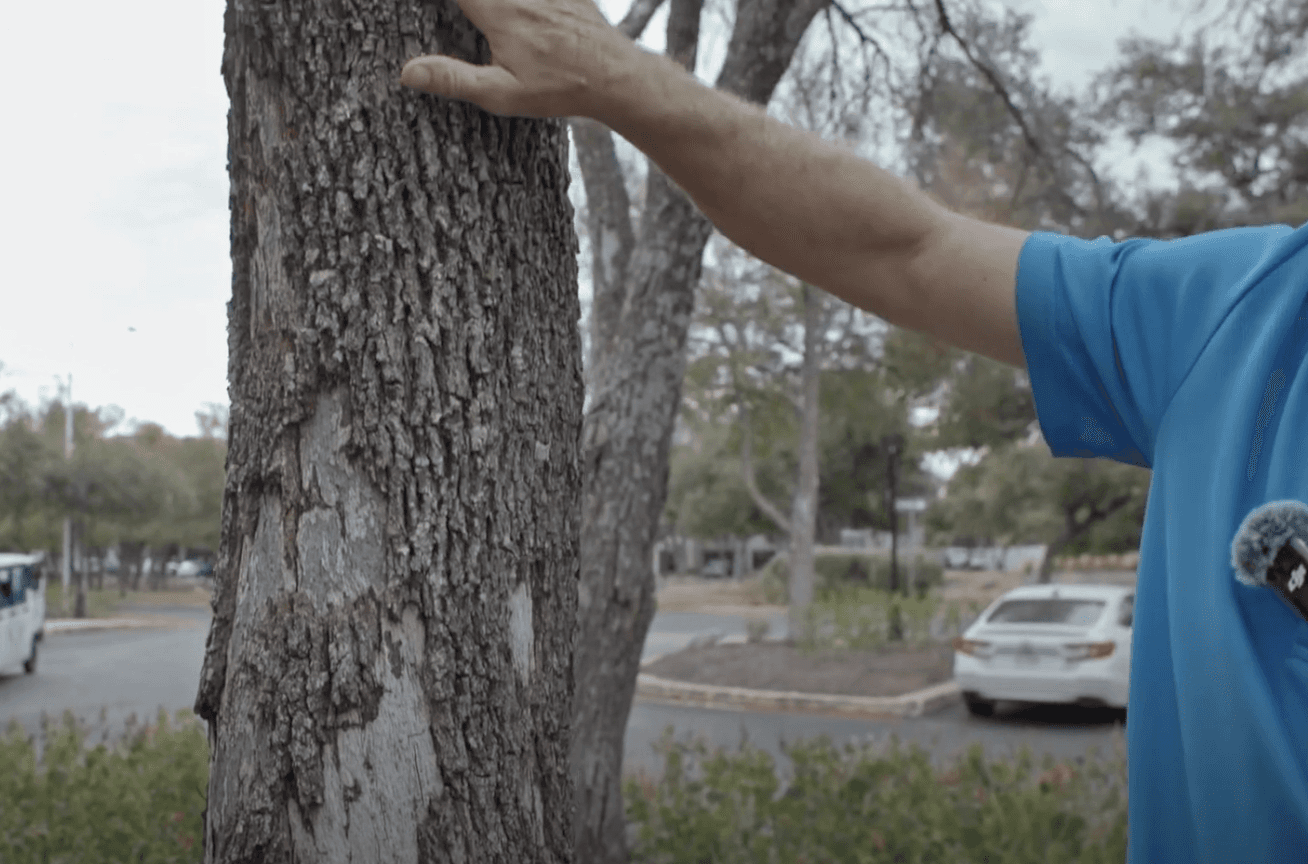
Patches of bark flaking off, revealing dusty gray, olive-green, or tan spore masses beneath
Sunken, dark lesions along the trunk or large limbs
Sudden limb dieback from the top down
Dry, brittle wood or fine sawdust collecting around the base of the tree
If you notice these symptoms, it’s essential to call a Certified Arborist for a full tree health assessment.
Can Hypoxylon Canker Be Treated?
There is currently no chemical treatment or fungicide to cure Hypoxylon canker. Once infection reaches the trunk or major limbs, the tree cannot be saved.
Removal and Containment
If the fungus is found early in small branches, complete removal of the infected limbs may help slow its progress. However, if the trunk is affected, the entire tree should be removed to prevent the spread of spores to nearby trees—especially other oaks.
Proper containment requires:
Professionally removing infected wood
Immediate disposal of contaminated material (never leave on site)
Sanitizing tools to avoid unintentional transmission
At Leaf Tree Services, we follow ISA guidelines to reduce the risk of cross-contamination and safely remove affected trees.
How to Prevent Hypoxylon Canker
Because there’s no cure, prevention and proactive care are your best defenses. Healthy trees are much less likely to succumb to infection.
Our arborists recommend:
Avoiding unnecessary root disturbance, especially during landscaping or construction
Using bio-identical root stimulators to improve resilience and overall tree health
Pruning properly and only when necessary, especially avoiding large cuts in hot, dry months unless urgent
Watering during drought periods, particularly young or newly planted trees
Mulching around the base (but not against the trunk) to retain soil moisture
Annual health evaluations to catch signs of stress early
Protect Your Trees in Central Texas
Hypoxylon canker is serious—but with early detection and expert guidance, you can minimize the damage and protect your property. Read more about tree maintenance to avoid tree disease. At Leaf Tree Services, we help homeowners, HOAs, and commercial property managers develop tree health plans tailored to Central Texas conditions.
Our ISA Certified Arborists will assess your trees, recommend necessary removals, and put a prevention plan in place to keep your landscape safe and strong.
Frequently Asked Questions
Q: What does Hypoxylon canker look like? A: You may notice peeling bark with gray or olive spore layers beneath, dead limbs, and thinning leaves. The wood underneath often looks dry and streaked.
Q: Can Hypoxylon canker spread to nearby trees? A: Yes. If not removed, spores can spread through wind, insects, or contaminated tools—especially to nearby oaks.
Q: Will my tree die if it has Hypoxylon canker? A: If the trunk is infected, the tree will eventually die. Immediate removal is advised to prevent spread and reduce safety hazards.
Q: Can I prune off the infected parts myself? A: No. DIY removal can worsen the issue by spreading spores. Professional handling is critical for safety and containment.
Q: How do I protect the other trees on my property? A: Keep trees healthy with deep watering, root stimulator applications, and annual arborist inspections. Don’t ignore signs of stress.
What Our Clients Are Saying
“Jeff, a certified arborist with extra training and lots of experience in the area, fit me into his schedule and showed up promptly, on very short notice. We did a walk-through of the property, advising on what trimming was most beneficial and helping me understand things to look for as potential problems with tree health. We picked a few trees that merited attention and a proposal for trimming followed. When the crew came out, at the expected time, we confirmed the work to be done before they started. Trimming was well done, quickly, per my requests. Tree canopies look noticeably better, appreciate their attention to balancing their cuts.”
– Mark
“I had a tree health consult with Jeff and it was incredibly informative and comprehensive. He told us all about our main oak that we want to keep healthy and suggested what would help keep the tree healthy and safe. He was not at all pushy on selling future service, but answered every question we had and did not rush through anything. This is exactly why I will be using Leaf Tree in the future for professional pruning and upkeep. It is entirely evident that Jeff is not only extremely knowledgeable, but passionate about tree health and wellness. I highly recommendation using Leaf Tree for all your tree needs!”
– Tim
“Jeff with Leaf Tree Service responded very quickly to our need. We were under a time frame imposed on us by the city. Jeff's crew was able to fit us in and prevented us from being fined. They took the extra steps to ensure the trees would not sprout up & ground the stumps to ensure mowers could keep area maintained. The city inspector wrote an email praising the quality of the job. The care in which jeff's crew took while clearing this brush was amazing & the remaining trees in this area look fantastic. Highly recommend Leaf Tree Service. In fact I am using them each quarter to maintain the other trees on our property. Quality work at a fair price, which is hard to find these days.”
– Rick
Where We're Located
1510 Sam Bass Rd,
Round Rock, TX 78681
(512) 670-6766
info@leaftreeservicesatx.com