“This is exactly why I will be using Leaf Tree in the future for professional pruning and upkeep…Jeff is not only extremely knowledgeable, but passionate about tree health and wellness. I highly recommendation using Leaf Tree for all your tree needs!”
– Tim (Google Review)

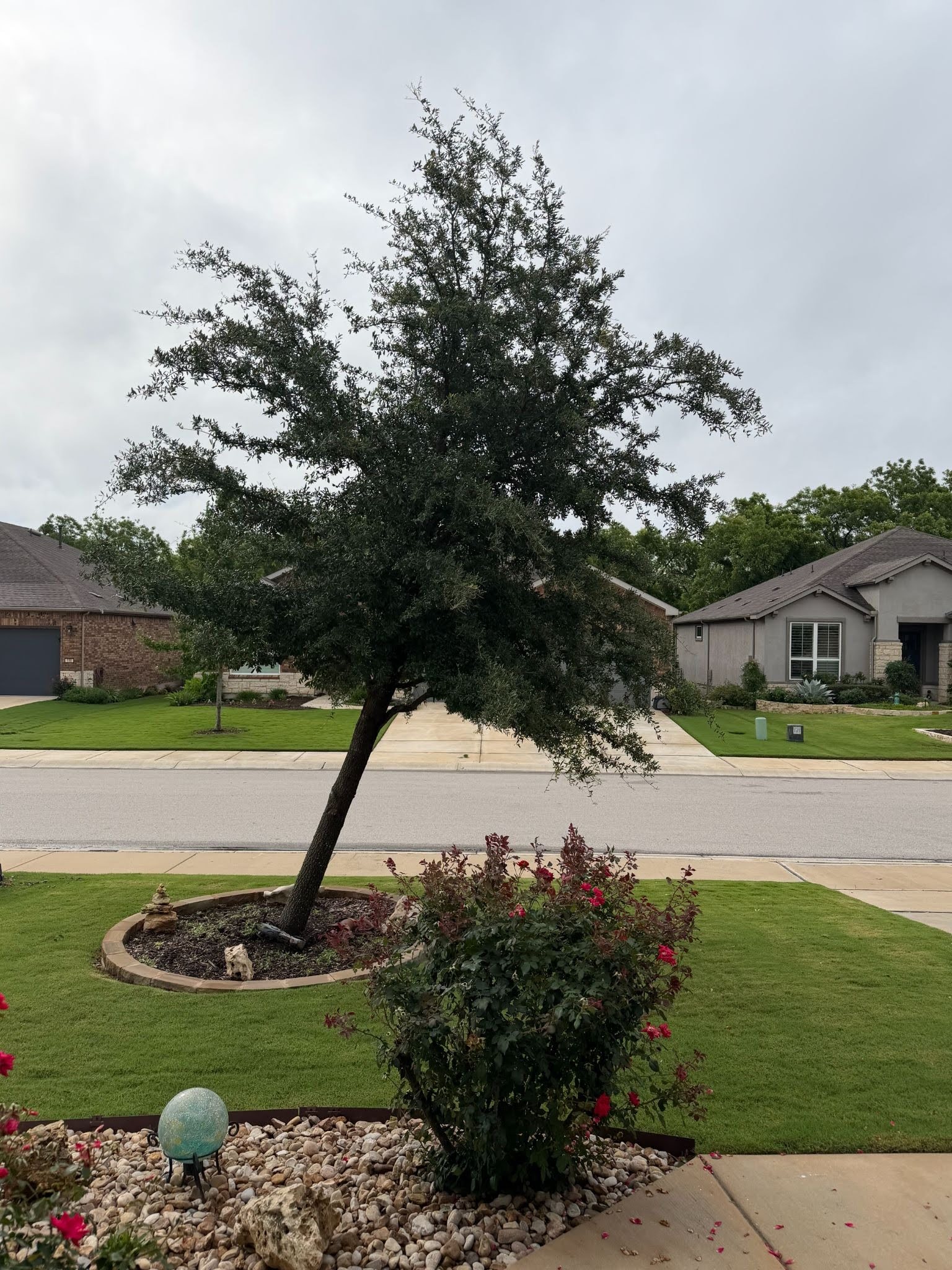
Why Mature Trees Lean After Storms: The Root System Problem
After this week's storms, we received calls from property owners with trees that survived the wind but are now leaning at severe angles. A tree leaning after a storm is telling you something important about its root system.
Most property owners don't understand what causes a tree to lean after a storm. Understanding the root causes helps you prevent this problem before the next severe weather event hits Central Texas.
What Causes Trees Leaning After Storms?
A tree suddenly leaning after a storm isn't necessarily a failure. The tree survived the wind event. But something about that tree made it vulnerable to leaning rather than standing firm.
The answer is usually the root system. Over-irrigation is one reason trees develop shallow, unstable root systems. But it's not the only reason. Sometimes it's how the tree was planted originally. Sometimes the soil around the root ball never properly integrated with surrounding soil. Sometimes roots hit bedrock or clay layers and couldn't establish deeper anchoring. Sometimes years of compacted soil from vehicles or foot traffic prevent root expansion.
Whatever the cause, a tree leaning after a storm is telling you something: that tree's root system isn't holding it securely in the ground.
Over-Irrigation and Shallow Root Systems
One of the most common causes we see is continuous bubble irrigation on mature trees.
Here's how it works: bubble emitters deliver water slowly and consistently to the upper soil layer. Roots naturally follow available water. If water is always present in the top 12-18 inches of soil, roots never need to develop deeper. Year after year of this shallow watering creates a root system that never extends down and out the way mature trees need.
When a tree is young and newly planted, some establishment watering makes sense. Shallow roots are normal while a young tree is establishing. But established mature trees don't need constant shallow watering. They need deep root systems that can anchor them against wind and weather.
If bubble irrigation stays on indefinitely, mature trees never develop those deep anchoring roots. The root system stays contained in the upper soil layer. When a storm brings strong winds, the tree has nothing holding it in the ground except shallow roots that can't handle the force.
Other Reasons for Shallow Root Systems
Over-irrigation isn't always the culprit. Trees also develop shallow root systems when they're planted improperly. Trees planted too deep, with roots kinked or circling in the soil, develop compromised root systems from the start. Sometimes a tree was planted with the root ball never properly integrated into surrounding soil, so roots stayed contained in the original planting soil rather than expanding outward.
Soil conditions also matter. Clay layers, bedrock, or other subsurface obstacles can prevent roots from establishing the deep anchoring systems they need. Compacted soil from vehicles or foot traffic can limit root expansion.
What Property Owners Face When Trees Lean
When a tree is leaning after a storm, property owners face a difficult situation. The tree is still alive. It still has foliage. But finding professional help to address it is harder than expected.
We had a call this week from a property owner with a mature tree leaning at a severe angle. He'd already called six other tree companies before reaching us. Every single one told him the tree wasn't savable or they don't do that kind of work. The problem is that correcting a leaning tree is complex work that falls outside what most tree services routinely handle. Many stick to removal or maintenance. Few attempt to straighten and stabilize a severely leaning tree.
But with the right approach and equipment, these trees can sometimes be saved.
How We Corrected a Leaning Tree This Week
The property owner we mentioned had called multiple companies. Most wouldn't attempt to help. When we arrived to assess the tree, we developed a plan.
Our approach: we used a truck and rope system to carefully pull the tree back upright. The tree needed leverage to come up safely. We positioned the truck to pull at an angle that gradually brought the tree back to vertical.
Once upright, we stabilized it with straps and a stake system. But this is temporary. Straps and stakes can only hold a tree for a few days. We'll return to adjust the support system and develop a longer-term plan for stability.
The point is: this tree was saved from removal. The property owner was relieved. Most other companies wouldn't even attempt it. But with expertise and equipment, we found a solution.
Another Leaning Tree Coming Next Week
We have another property owner dealing with a similar situation. His tree is also leaning severely after the storms. He also called multiple companies and heard "can't help you" from most of them. He's in the same position: uncertain if the tree can be saved, uncertain if there's enough leverage to pull it upright, but hopeful.
This scenario is becoming more common as severe storms impact Central Texas. Property owners with mature trees face uncertainty about whether their trees are salvageable or if removal is necessary.
FAQS About Leaning Trees
Can Trees Leaning After Storms Be Saved?
The answer depends on whether there's a leverage point to work with.
The key factor in straightening a leaning tree is having something to pull against. If there's enough leverage available through the tree's structure or surrounding anchoring points, we can work with it. If there's not enough leverage, straightening becomes impossible regardless of how stable the tree might be once upright.
Every tree and every situation is different. Some trees have good structural points for rigging and pulling. Others don't. Some soil conditions allow for successful re-anchoring after straightening. Others don't. Professional assessment determines whether your specific tree can be corrected or if other options are better.
What Needs to Happen After a Tree Is Straightened
If we do straighten a leaning tree, that's not the end. The tree needs support while its root system re-establishes and strengthens.
Temporary stabilization with straps and stakes is just the first step. Over the following weeks and months, as the tree begins to stabilize naturally, the support system needs adjustment. The goal is gradually reducing external support as the tree's own root system strengthens enough to hold it.
We also need to address whatever caused the shallow roots in the first place. If it was bubble irrigation, that needs to stop. If it was poor initial planting, we might need to work on encouraging deeper root development. The goal is a tree that can stand on its own without external support.
This is longer-term work. It's not a quick fix. But done properly, a tree that was nearly lost to removal becomes established and stable again.
Preventing Trees Leaning After Storms
The best approach is prevention. Not all causes of shallow roots can be prevented, but some can.
If you have bubble emitters on mature trees, consider stopping them. Mature established trees in Central Texas don't need constant shallow watering. They may actually be weaker for it. Shallow roots mean unstable trees during storms.
For new tree plantings, be realistic about how long establishment watering continues. Young trees need some supplemental water while they're establishing. But this shouldn't continue indefinitely. At some point, the tree needs to develop its own deep root system. Ongoing shallow irrigation prevents that development.
Proper planting depth and technique matter too. Trees planted too deep or with kinked roots start with compromised root systems. Proper planting gives trees the best chance to develop strong anchoring.
Watch your mature trees for signs of stress or unusual conditions. If a tree seems unstable or is leaning for no obvious reason, professional assessment makes sense. Better to address problems before a storm reveals them dramatically.
What to Do If Your Tree Is Leaning After a Storm
If you have a tree leaning after the recent storms, don't assume it needs to come down. Don't accept the first "no" from tree companies you call.
Contact an ISA Certified Arborist for assessment. We've straightened trees that others said weren’t savable.. We have equipment and experience with this specific problem. Not every tree can be saved, but you won't know until you get a professional evaluation.
Don’t wait too long to contact someone. The longer a tree leans, the more stress is on the partially uprooted root system.
If you have a tree leaning after a storm, the right first step is professional assessment. Not all leaning trees can be straightened and not all are worth straightening. But you won't know unless someone actually evaluates your tree instead of just recommending removal. Contact us for an assessment of your specific situation.
Spring Tree Trimming in Central Texas: What You Need to Know Before Storm Season
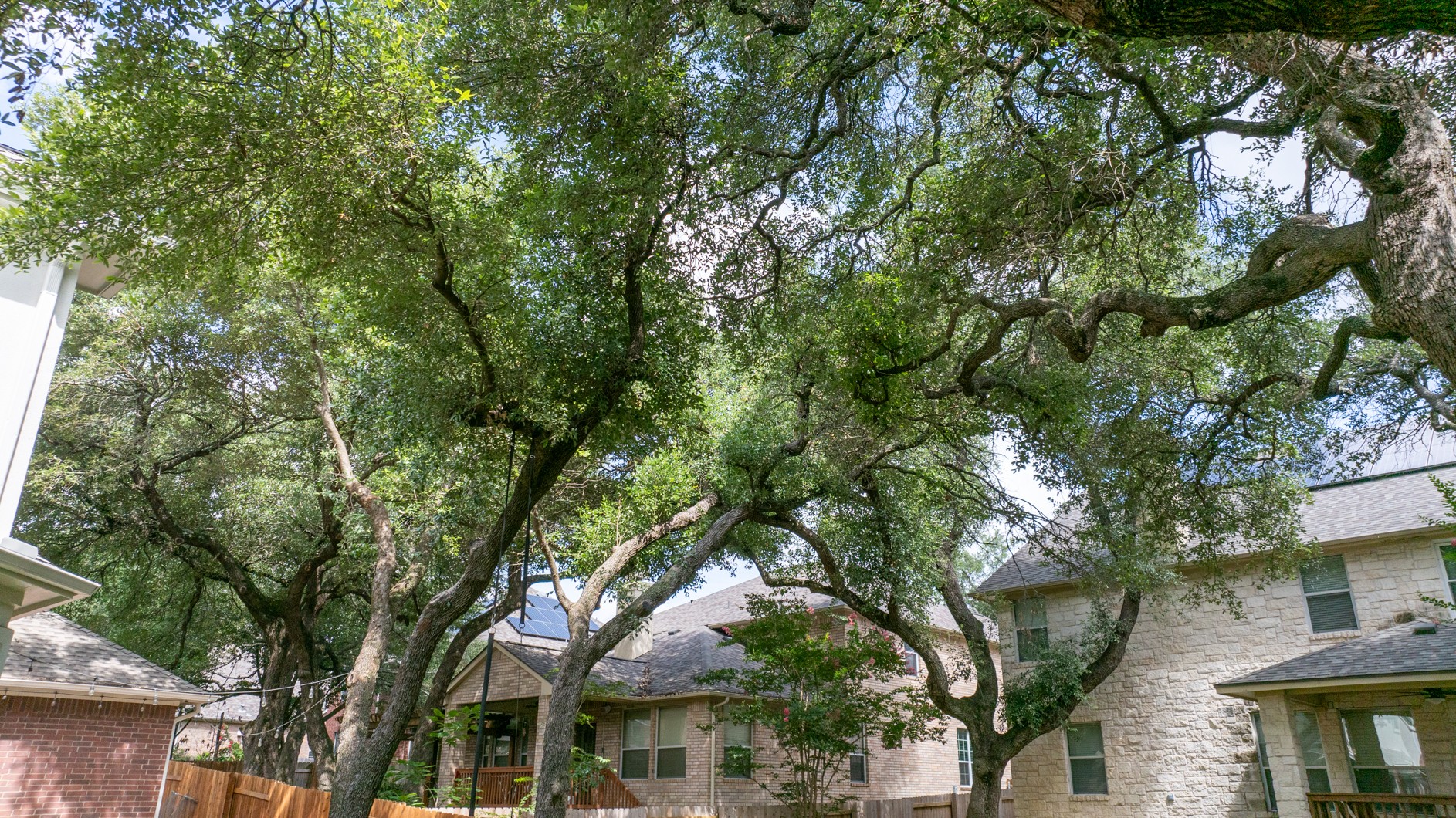
Spring arrives in Central Texas and suddenly your trees look different. What was bare and manageable all winter is now full of leaves, and problems you didn't notice are suddenly impossible to ignore. That dead branch you walked past all winter? Now it stands out against new green growth. Those limbs near your roof? They're actually touching it. Your overgrown tree? It's blocking half your view.
This is exactly why spring tree trimming is critical in Central Texas. Spring doesn't just bring beautiful weather and blooming flowers. It brings severe storms. April through June is peak storm season here, and the trees you ignored all winter become serious hazards when spring storms hit. Understanding what spring tree trimming should address, and scheduling it now, protects your property before the first thunderstorm rolls through.
Why Spring Makes Tree Problems Obvious
While tree work happens year-round, spring is when most property owners suddenly notice issues that were there all along. Winter trees are easy to overlook. Bare branches blend into the sky. Problems hide. You focus on other things. Then spring arrives, trees leaf out, and issues become obvious.
Dead wood that was barely noticeable in winter now stands out starkly against healthy green growth. Branches you thought were "close" to your roof are actually rubbing against shingles. That dense canopy you figured was fine now blocks your entire view and looks ready to catch serious wind. Low-hanging branches that seemed manageable are now clearly in the way.
Spring forces you to confront reality: your trees need attention. The question isn't whether you need spring tree trimming. It's when you want to schedule it, ideally before storms arrive.
The 7 Critical Problems Spring Tree Trimming Addresses
1. Dead Wood You Didn't Notice All Winter
Dead branches are easiest to spot in winter when trees are bare. But most people don't spend winter walking their property looking up at trees. Then spring comes, healthy branches produce leaves, and dead wood becomes glaringly obvious by contrast.
Dead wood is the highest priority for spring tree trimming. These branches can fall without warning, even without storms. They're structurally compromised, often diseased or damaged, and they pose immediate danger to anyone or anything below them. During Central Texas storms with high winds, dead branches become projectiles that can damage vehicles, structures, and cause serious injuries.
The longer dead wood stays in your trees, the more dangerous it becomes. Wood continues deteriorating, attachment points weaken, and the risk of failure increases. Spring tree care should always start with dead wood removal—it's the most urgent issue spring reveals.
2. Trees Too Close to Your Roof and Structures
This is the problem most homeowners discover in spring: trees are way closer to structures than they realized. All winter, bare branches didn't seem that close. Then leaves fill in, branches extend further under the weight, and suddenly you realize your tree is touching your roof.
Trees near structures create multiple problems. Branches rubbing against roofs damage shingles, creating entry points for water and eventually causing leaks. Overhanging branches provide highways for pests—squirrels, raccoons, and rats use tree branches to access your attic and walls. During storms, wind pushes branches into structures with significant force, breaking windows, damaging siding, and punching holes in roofs.
Proper clearance from structures should be 6 to 10 feet. If your trees don't have this clearance, spring tree trimming needs to address it now, before storm season gets serious. Once storms start, branches that are merely "close" become battering rams against your home.
3. Overgrown Canopies That Catch Too Much Wind
Dense, overgrown tree canopies look impressive when they leaf out in spring. They also represent significant storm damage risk. The thicker and fuller a canopy, the more wind it catches. More wind resistance means more force on the trunk and root system during storms. This force can snap large branches, split trunks, or even topple entire trees.
Overgrown canopies also prevent air circulation through the tree. This dense growth creates environments where fungal diseases thrive. Poor air circulation keeps moisture trapped in the canopy, promoting rot and decay that weaken branches from the inside.
Spring tree trimming should include crown thinning for overgrown trees. Proper thinning removes select branches throughout the canopy, allowing wind to pass through rather than pushing against a solid wall of leaves. This significantly reduces storm damage risk while maintaining the tree's natural shape and health. Crown thinning also allows more sunlight to reach your lawn and landscape below, improving overall yard health.
4. Low-Hanging Branches Over Driveways and Walkways
Low-hanging branches are another spring surprise. Branches that seemed fine in winter now clearly interfere with vehicles, pedestrians, and activities. Worse, spring growth will make them hang even lower as new leaves add weight and branches extend.
These branches create safety hazards and daily nuisances. They scrape the tops of vehicles, hit people in the face when walking, and can damage delivery trucks or trailers. They also limit visibility around your property, creating blind spots that can be dangerous.
Spring tree care should include raising the canopy over driveways, walkways, and parking areas. This work is easiest to do now, before branches grow even more during the active growing season. Waiting until summer means dealing with more growth and potentially more severe problems.
5. Crossing and Rubbing Branches
When trees are bare, crossing branches are visible but don't seem urgent. Then spring arrives, leaves fill in, and you realize these branches are actively rubbing together every time wind blows. This constant friction creates wounds in the bark where diseases and pests can enter.
Crossing branches also create structural problems. The attachment points for these branches are often weak. When one branch rubs against another, it gradually weakens both branches. During storms, these weakened areas fail first. One or both branches can break, often taking additional healthy wood with them.
Proper spring tree trimming removes crossing branches before they cause significant damage. The decision about which branch to remove depends on the tree's overall structure, which branch is healthier, and what removal creates the best shape. An ISA Certified Arborist can make these assessments and ensure crossing branches are addressed properly.
6. V-Shaped Branch Attachments and Structural Weaknesses
Some tree problems aren't immediately obvious even in spring, but they're critical to address before storm season. V-shaped branch attachments, also called co-dominant stems, represent one of the most common structural weaknesses in trees.
When two branches grow up from the same point at narrow angles (forming a "V"), the attachment point is inherently weak. Unlike branches that grow at wider angles with strong attachment points, V-shaped attachments include bark that grows between the two stems. This included bark prevents strong wood-to-wood connection. The result is an attachment that looks strong but is actually prone to splitting.
During Central Texas storms, trees with V-shaped attachments often split down the middle. These splits are catastrophic—they destroy the tree and can cause massive property damage when large sections fall. Spring is the ideal time to identify these structural problems and address them through professional tree care. Depending on the situation, the solution might be removing one of the co-dominant stems, installing cables for support, or in severe cases, removing the tree entirely before it fails.
7. Winter Storm Damage You've Been Ignoring
Central Texas winters can bring ice, occasional freezes, and winter storms. These events often cause damage that seems stable enough to ignore. Cracked limbs that didn't fall, hanging branches caught in other branches, or partially split trunks that held through winter all seem manageable—until spring arrives.
As trees leaf out, the weight on branches increases significantly. Branches that were cracked but stable in winter can fail under the added weight of spring leaves. Hanging branches that seemed secure can drop without warning. Splits that held through winter can widen as the tree begins active growth.
Spring tree trimming must address any winter damage before it becomes a bigger problem. What was a manageable situation in February becomes an emergency in April. Storm damage doesn't heal itself—it gets worse. Professional assessment and correction now prevents catastrophic failure later.
Benefits of Spring Tree Trimming Over Waiting
While quality tree care can happen any time of year, spring offers some practical advantages for property owners. Here's why scheduling spring tree trimming makes sense:
You address issues before storm season peaks. April through June brings severe thunderstorms, high winds, hail, and occasionally tornadoes to Central Texas. If you have already weak or damaged branches, addressing them before storms arrive makes sense. Trees with existing problems are more likely to have issues during severe weather.
Trees are easier to assess before full leaf out. Early spring, when leaves are just emerging, provides better visibility for arborists to see exactly what they're working on. By late spring and summer, full canopies make it harder to see structural issues. Better visibility means more thorough assessments.
Scheduling is typically easier in early spring. Once spring storms start hitting and summer heat arrives, tree services get busier. Schedule spring tree care in March or early April and you typically get on the calendar quickly. Wait until May or June and availability may be more limited.
Preventive maintenance costs less than emergency work. Storm damage removal requires immediate response, often outside normal hours, with more difficult working conditions. Scheduled maintenance allows for better planning and typically lower costs than emergency calls.
What Complete Spring Tree Trimming Should Include
Effective spring tree care isn't just about cutting a few branches. Comprehensive spring tree trimming addresses multiple aspects of tree health and safety:
Dead wood removal is always priority number one. Every piece of dead wood in your trees represents a potential projectile during storms. Complete dead wood removal throughout the entire tree provides immediate risk reduction.
Structural clearance from buildings must be established. All branches should be at least 6 to 10 feet away from your roof, walls, and other structures. This clearance prevents rubbing damage, eliminates pest access routes, and ensures branches can't impact structures during storms.
Crown thinning reduces wind resistance in overgrown trees. Proper thinning removes select branches throughout the canopy while maintaining the tree's natural shape. This allows wind to pass through rather than pushing against a solid mass of leaves.
Removing crossing and rubbing branches prevents ongoing damage and structural failures. Every set of crossing branches should be assessed, and one branch should be removed based on which creates better overall tree structure.
Raising the canopy over walkways, driveways, and access points improves safety and functionality. Low-hanging branches should be removed to appropriate heights based on use, typically 8 feet over walkways and 14 feet over driveways.
Correcting weak attachments through pruning or support systems addresses long-term structural problems. Trees with co-dominant stems may need one stem removed or may require cabling to support the weak attachment.
Timing Your Spring Tree Trimming in Central Texas
When exactly should you schedule spring tree care? The answer depends on several factors, but earlier is generally better than later.
Early spring—March through early April—is ideal for most spring tree trimming in Central Texas. Trees are beginning to wake up, but they haven't put full energy into new growth yet. Arborists can still see structure relatively clearly. Storm season hasn't reached its peak ,and scheduling is still relatively easy to get.
Mid to late spring—late April and May—is still acceptable but becoming more urgent. Storm season is in full swing. Trees are fully leafed out. Every week that passes increases the risk that storms will hit before your trees are properly maintained.
Important exception for oak trees: Oaks should not be trimmed from February through June unless there's an emergency situation. This timing avoids the period when beetles that can spread Oak Wilt are most active. For oaks, either trim in early February (before the exclusion period) or wait until July. However, dead wood removal and emergency situations always take priority over timing recommendations—a hazardous oak branch must be removed regardless of the month.
The key message: don't wait. The sooner you schedule spring tree trimming, the better protected your property will be before peak storm season arrives.
DIY vs. Professional Spring Tree Trimming
Some tree work is reasonable for homeowners to tackle. Much of it requires professional expertise and equipment. Understanding the difference keeps you safe and ensures proper results.
When you can DIY:
Small branches under 2 inches in diameter
At ground level or easily reachable with a small ladder
Nowhere near power lines
You understand proper pruning cuts (improper cuts damage trees even on small branches)
When you must use professionals:
Anything near power lines (never attempt this yourself)
High branches requiring ladders or climbing
Large branches (proper cutting technique prevents tree damage)
Any structural concerns or uncertainties
Trees near buildings or valuable property
Your Spring Storm Preparation Checklist
Take action now to assess your trees and schedule necessary spring tree trimming:
Walk your entire property after the trees leaf out. You can't address problems you haven't identified. Look at every tree from multiple angles. Pay special attention to trees near structures, over parking areas, and near power lines.
Look up and identify dead wood. Dead branches stand out against healthy green growth in spring. Make note of every dead branch you can see, especially large ones high in the tree.
Check clearance from all structures. Walk around your house, garage, sheds, and other buildings. Note every place where branches are within 10 feet of structures.
Identify low-hanging branches. Walk your driveways and pathways. Note where you have to duck or where branches are close to vehicles.
Look for dense, overgrown canopies. Step back and look at the overall shape of your trees. Trees with extremely dense canopies that look like solid masses of leaves need thinning.
Note any damage or structural concerns. Look for cracked branches, splits in trunks, V-shaped attachments, leaning trees, or anything else that looks concerning.
Schedule assessment with an ISA Certified Arborist. Once you've identified potential issues, schedule a professional assessment to confirm what needs to be done and identify problems you might have missed.
Understanding the Costs of Delayed Maintenance
Property owners often ask about the financial difference between proactive tree care and waiting until problems become urgent. The numbers tell a clear story.
Emergency storm removal costs significantly more than scheduled spring tree trimming. When storms bring down branches or entire trees, you need immediate service. Emergency response, after-hours work, and difficult working conditions all command premium pricing. Preventive trimming might cost $800-$1500 while the same work done as emergency removal could cost $2,000 to $5000.
Property damage from fallen branches adds to overall costs. Roof repairs, siding replacement, vehicle damage, broken fences, and destroyed landscaping all come with price tags. Your insurance deductible alone might exceed what preventive trimming would have cost. And insurance doesn't cover neglect. If obvious hazards were ignored, claims may be denied.
Lost trees represent significant investment. Mature trees add value to your property. They provide shade that reduces cooling costs, improve air quality, increase curb appeal, and create habitat for wildlife. A tree that could have been maintained properly, but instead fails, is a loss that takes decades to replace.
Safety concerns beyond financial costs. The most important consideration isn't financial. Falling branches can cause serious injuries. Property damage is fixable. Protecting your family's safety is what matters most.
Taking Action on Spring Tree Trimming
Spring has arrived. Your trees have revealed issues that need attention. Storm season runs from April through June in Central Texas. Now is a good time to address tree problems you've identified.
Professional spring tree trimming addresses every issue spring revealed: dead wood, overgrown canopies, branches too close to structures, crossing branches, and structural weaknesses. Comprehensive tree care protects your property, your family, and your trees.
Schedule your spring tree trimming assessment when it works for your schedule. Walk your property, identify issues, and contact an ISA Certified Arborist for professional evaluation. You can contact us to schedule an appointment. Addressing tree problems proactively makes more sense than waiting for them to become emergencies.
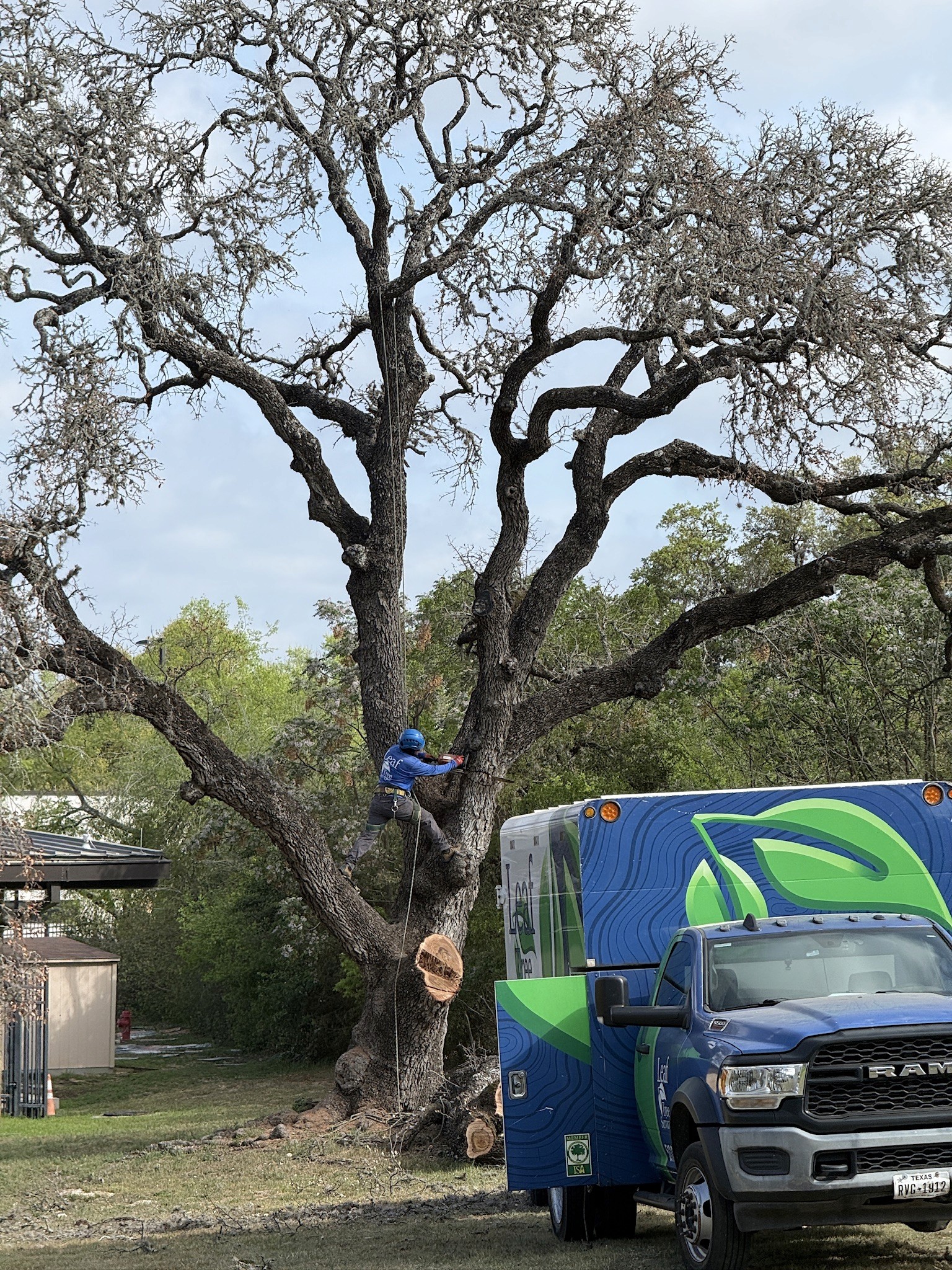
Winter Tree Care in Central Texas: Why Dormant Season is Prime Time for Tree Work
Most homeowners wait until spring to think about their trees. But here's what professional arborists know: winter tree care is actually the best time for most tree work in Central Texas.
Winter tree care during dormant season gives your trees the strongest start to the growing season. While your neighbors are waiting for warm weather, you can get ahead by scheduling tree maintenance now. Understanding why winter tree care works better helps you plan the right maintenance at the right time.
This guide explains why winter is prime time for tree work, what should be done now, and how winter scheduling benefits both your trees and your schedule.
What is Dormant Season?
Dormant season is when trees stop actively growing and rest for winter. In Central Texas, this typically runs from late November through early March.
How Trees Go Dormant
As days get shorter and temperatures drop, trees begin shutting down for winter. They stop producing new leaves and growth. Energy moves from branches down into the root system for storage. The tree essentially goes to sleep.
This dormancy is a natural survival mechanism. Trees conserve energy during months when conditions aren't ideal for growth. They're still alive and healthy, just resting.
Signs Your Trees Are Dormant
Deciduous trees show obvious signs of dormancy. All their leaves have fallen, no new growth appears, branches stand bare against the sky, and buds remain closed, waiting for spring warmth. The transformation is complete and unmistakable.
Evergreen trees like cedar and live oak stay green year-round, but they still experience dormancy in their own way. Their growth slows dramatically, new shoots stop appearing, and energy moves down into the roots for storage rather than fueling active growth above ground.
In Central Texas, most trees reach full dormancy by late December and stay dormant through February.
Why Winter Tree Care is Better for Tree Health
Proper winter tree care gives trees significant advantages over pruning during active growth periods.
Less Stress on Trees
When trees are dormant, they're not using energy for growth. Pruning doesn't interrupt active processes like leaf production or flowering. The tree can focus entirely on healing cuts without diverting resources from growth.
Think of it like surgery recovery. You heal better when you're resting than when you're running a marathon. Trees work the same way.
Better Spring Growth
Trees pruned in winter are ready to grow vigorously when spring arrives. When warm weather returns, the tree puts all its energy into healthy new growth. Schedule a free estimate today with Leaf Tree Services by clicking on our contact us page or call/text 512-670-6766.
This head start makes a visible difference. Trees pruned in winter typically show stronger, healthier growth than trees pruned during the growing season.
Better Visibility of Tree Structure
Without leaves blocking your view, you can see the entire tree structure more clearly. While experienced arborists can identify problems when trees are full of leaves, winter visibility makes the job easier and more thorough.
This clearer visibility helps arborists identify crossing or rubbing branches more easily, spot structural problems, see dead wood that needs removal, make better decisions about which branches to remove, and create better overall tree shape. Winter reveals details that are harder to see when trees are in full leaf.
Reduced Disease and Pest Pressure
Most insects and disease-causing organisms are inactive during winter. This dramatically reduces the risk of infection through fresh cuts. Trees begin sealing cuts immediately - within minutes of pruning.
Fungal spores aren't spreading in cold weather. Beetles aren't active. Disease organisms are dormant just like the trees.
No Interference with Wildlife
Many birds and animals use trees for nesting in spring and summer. Winter tree work happens when nests are empty and wildlife has moved to other areas. You can maintain your trees without disturbing birds raising their young.
What Tree Work Should Be Done in Winter
Winter is the ideal time for several types of tree maintenance.
Structural Pruning
Winter is perfect for major structural work. Removing crossing branches prevents the wounds that occur when branches rub together, eliminating entry points for disease. Trees with weak branch angles, co-dominant stems, or other structural problems benefit from winter correction when the work causes minimal stress. Creating proper tree shape and removing excess branches works best in winter when you can see what you're doing. Raising the canopy by removing lower branches to clear walkways, driveways, or improve views is also easier during dormant months.
Dead Wood Removal
Dead branches are visible year-round, but they're easiest to identify in winter. Without leaves, dead wood stands out clearly against the sky.
Dead branches should always be removed regardless of season, but winter makes the job easier and more thorough. You won't miss dead branches hidden behind leaves.
Crown Reduction
If trees have grown too large for their location, winter is the time to reduce their size properly. This work requires removing significant amounts of wood, which stresses trees less during dormancy.
Tree Removal
Trees that need removal can come down any time, but winter offers distinct advantages. Access is easier with no leaves to clean up. Surrounding landscape suffers less damage since grass is dormant and not actively growing. Scheduling availability is typically better. And if you've been waiting to remove a hazardous tree, winter removal eliminates the risk of storm damage before spring weather arrives.
Cable and Brace Installation
Trees with structural weaknesses may need cables or braces for support. Installing these support systems works best in winter when you can clearly see the structure and the tree isn't actively growing.
Trees That Benefit Most from Winter Care
Most Central Texas trees benefit from winter maintenance, but some particularly thrive with dormant season work.
Shade Trees
Most shade trees thrive with winter pruning. Pecans benefit greatly from winter work that removes dead wood, corrects structure, and thins crowded branches. Ash trees respond well to winter pruning that promotes healthy growth and good structure. Maples are best pruned while dormant to prevent excessive sap flow. Elms benefit from winter work that reduces disease transmission risk. Hackberries respond excellently to winter structural pruning.
Oak Trees
Oak trees have specific timing needs, but winter is generally safe for oak pruning in Central Texas. The period from July through January avoids the months when Oak Wilt spreading beetles are most active.
Winter oak pruning (December through January) gives you a safe window for structural work before the February-June period when extra caution is needed.
As always, hazardous oak branches should be removed immediately regardless of season.
Fruit and Nut Trees
Most fruit trees benefit from winter pruning, though timing within winter matters. Pecan trees do well with winter structural pruning and dead wood removal throughout the season. Peach and plum trees benefit most from late winter pruning in February, which encourages good fruit production. Fig trees respond to winter pruning that shapes the tree and promotes fruit production.
For fruit trees, aim for late winter work—late January through February—rather than early winter. This timing avoids encouraging early growth that could be damaged by late freezes.
What NOT to Do in Winter
While winter is great for most tree work, a few things should wait.
Don't Prune Spring-Blooming Trees
Trees that bloom in early spring set their flower buds in summer and fall. If you prune them in winter, you remove next spring's flowers.
Wait until after blooming to prune:
Redbuds
Bradford pears
Flowering plums
Mountain laurels
Mexican plums
These trees should be pruned immediately after they finish blooming, not during winter dormancy.
Don't Transplant During Freezes
While winter is generally good for transplanting, avoid moving trees during hard freezes. Wait for temperatures above freezing to give roots the best chance to establish.
Benefits of Winter Scheduling
Beyond tree health benefits, winter scheduling offers practical advantages for homeowners and property managers.
Better Availability
Tree services are less busy in winter than in spring and summer. This means faster scheduling where you get your work done in weeks rather than months. You get more flexible timing to choose dates that work best for you. Better communication happens because arborists have more time to discuss your specific needs. Crews can do more thorough work because they're not rushing between jobs.
Spring and summer are peak seasons for tree services when everyone wants work done at the same time. Winter gives you access to the same quality service with much better availability.
Lower Costs
Some tree services offer winter discounts or more competitive pricing during slower months. Even without discounts, better availability means you're not paying premium rates for emergency or rush service.
Less Landscape Damage
Dormant grass handles equipment traffic better than actively growing grass. Trees don't drop leaves all over your freshly cleaned yard. Ground conditions are often better for heavy equipment access.
Winter tree work causes less collateral damage to your landscape than summer work.
Preparation for Spring Storms
Central Texas springs bring severe weather. Trees properly maintained in winter are better prepared to handle spring storms.
Dead wood removal, structural corrections, and thinning reduce storm damage risk. Better to address these issues in calm winter weather than after a storm brings branches down.
Beat the Spring Rush
Everyone thinks about tree care in spring. By scheduling winter tree care, you're ahead of the crowd. Your trees are ready to grow strong when spring arrives, while your neighbors are still waiting for appointments.
How Winter Weather Affects Tree Work
Central Texas winters are generally mild, making consistent tree work possible throughout the season.
Cold Snaps Don't Hurt Dormant Trees
Some homeowners worry that pruning before a cold snap will damage trees. This isn't true for fully dormant trees. Dormant trees are designed to handle cold weather. Proper pruning cuts don't make them more vulnerable to cold.
The concern about cold damage applies more to late winter pruning (February-March) when trees might start waking up during warm spells. Early to mid-winter pruning avoids this issue entirely.
Signs Your Trees Need Winter Care
Walk your property and look for these signs that indicate your trees need professional attention this winter.
Dead Branches
Dead wood is visible year-round, but it's most obvious in winter. Look for branches with no buds, brittle or broken branches, branches with peeling bark, and wood that looks different from living branches. Dead branches should be removed regardless of season, but winter makes them easier to spot and more efficient to remove.
Crossing or Rubbing Branches
Branches that cross and rub together create wounds where disease can enter. These structural problems are easy to see in winter and should be corrected before spring growth begins.
Crowded Canopy
When you can see light through the canopy, the tree has good air circulation. If the canopy looks like a solid mass with no light penetrating, the tree needs thinning.
Proper thinning reduces disease pressure and allows light to reach interior branches, promoting healthy growth throughout the tree.
Weak Branch Attachments
Look for branches with narrow angles where they connect to the trunk. These weak attachments are prone to failure and should be corrected or removed.
V-shaped branch attachments are weaker than U-shaped attachments. Winter is the time to address these structural problems.
Lopsided or Unbalanced Trees
Trees should have relatively balanced canopies. If one side is significantly heavier than the other, the tree could fail during storms. Winter structural pruning can correct balance issues.
Low-Hanging Branches
Branches that obstruct walkways, driveways, or views should be removed. This work is easier in winter when you're not fighting through leaves to make cuts.
Trees Growing Too Close to Structures
Trees too close to your house, roof, or power lines need attention before they cause damage. Winter is an excellent time to address clearance issues.
Winter Tree Care for Different Property Types
Different properties have different winter tree care needs.
Residential Properties
Homeowners should focus on safety first by removing dead wood and hazardous branches before spring storms arrive. Visibility matters too—clearing branches that block views or obstruct areas improves your property immediately. Tree health through structural pruning promotes long-term vitality. And aesthetics count, as shaping trees for better appearance enhances your landscape's overall look.
Winter is ideal for all these goals. You can enjoy better views immediately and know your trees are ready for spring growth.
Commercial Properties
Property managers should prioritize liability reduction by removing hazards before they cause injury or damage. Aesthetic appeal matters because well-maintained trees improve property appearance and value. Preventive maintenance costs less than emergency repairs. And scheduling winter maintenance causes less disruption to business operations than work during busy seasons.
Commercial properties benefit from winter maintenance schedules that keep trees healthy and safe year-round.
Rental Properties
Landlords should address safety hazards like dead wood and structural problems that could cause injury or property damage. Curb appeal matters because well-maintained trees attract better tenants and command higher rents. Property value increases with healthy trees that enhance the landscape. And taking a preventive approach through regular maintenance prevents expensive emergency calls that eat into your returns.
Winter tree work can happen between tenants without disrupting anyone.
Common Winter Tree Care Questions
Can you prune trees when it's cold?
Yes. Dormant trees handle pruning well in cold weather. As long as conditions are safe for workers (no ice, reasonable temperatures), tree pruning works fine in winter. The trees aren't damaged by cold weather pruning.
Will winter pruning make my trees more vulnerable to freezes?
No. Proper pruning cuts don't make dormant trees more vulnerable to cold. Trees are designed to handle winter weather in their dormant state. Pruning doesn't change this.
How long does it take trees to heal from winter pruning?
Trees begin the healing process immediately - within minutes of making the cut. The sealing process happens quickly, which is one reason why winter pruning works so well.
Can I prune my trees myself in winter?
Small branches (under 2 inches diameter) at ground level can be DIY projects if you have proper tools and knowledge. Anything larger, higher, or near structures should be handled by professional arborists with proper equipment and insurance.
Should I wait until all leaves have fallen?
Yes. Wait until trees are fully dormant before major pruning work. In Central Texas, this typically means late December through February for most species.
What if we have a warm spell in winter?
Brief warm periods don't bring trees out of dormancy. As long as day length is still short, trees remain dormant even during warm days. Winter pruning is safe during warm spells.
Do I need to do anything after winter pruning?
No special care is needed after winter pruning. Trees handle the rest on their own. Just maintain normal watering if we're in a dry period.
Planning Your Winter Tree Care
Don't wait until the last minute to schedule winter tree maintenance. Here's how to plan effectively.
Start with Professional Assessment
Have an ISA Certified Arborist assess your trees. They can identify trees that need work this winter, establish priorities for safety and health, develop long-term maintenance plans, and provide realistic timelines and costs. Professional assessment ensures you're addressing the right issues at the right time rather than guessing what your trees need.
Prioritize Safety Issues
If budget or time is limited, prioritize:
Dead wood removal (highest safety priority)
Hazardous branches near structures or high-traffic areas
Structural problems that could lead to failure
Routine maintenance to keep trees healthy
Safety issues should never wait. Other work can be phased over multiple winters if needed.
Schedule Early
Winter scheduling is better than spring, but early winter scheduling is better than late winter. Contact tree services in November or December to get the best available dates.
Late winter (February) starts getting busy as people prepare for spring. Early winter gives you the most flexibility.
Plan for Multi-Year Projects
Large properties or properties with many trees might need multi-year maintenance plans. Work with your arborist to prioritize which trees need attention each winter.
Spreading work over several years is fine. It's better to do proper work over time than to rush through everything at once.
The Bottom Line on Winter Tree Care
Winter tree care in Central Texas offers significant advantages for tree health, scheduling, and cost. Dormant season pruning gives trees the best possible start to the growing season.
Winter tree care provides less stress on trees, better visibility for proper work, reduced disease and pest risks, better scheduling availability, preparation for spring storms, and less landscape damage. Most tree maintenance work should happen during winter dormancy. Safety issues should be addressed immediately regardless of season, but planned maintenance works best in winter.
Don't follow the crowd and wait until spring. Professional winter tree care gives you healthier trees, better scheduling, and peace of mind knowing your trees are ready for whatever spring and summer bring.
Schedule your winter tree assessment now while availability is good. Your trees will thank you with strong, healthy growth when spring arrives.
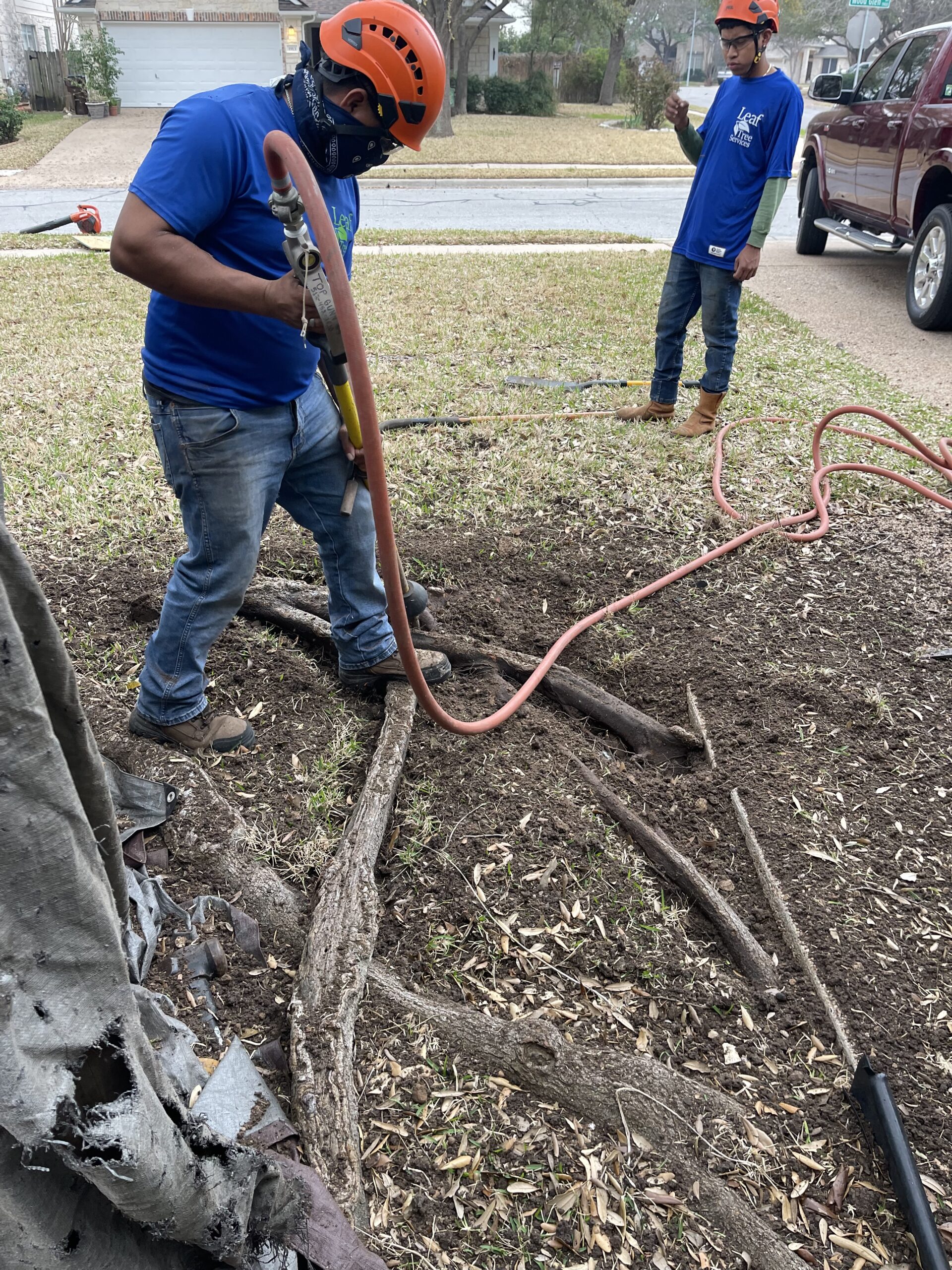
Winter Tree Pruning Central Texas: Best Time for Dormant Season Care
Winter in Central Texas might not bring heavy snow, but it brings something tree care professionals know is invaluable: dormancy. While your trees look like they're sleeping above ground, this is actually the best time of year for major tree work. At Leaf Tree Services, we've spent over 10 years maintaining trees across Austin and Central Texas, and we consistently recommend winter for significant trimming. Winter tree pruning Central Texas properties offers unique advantages you won't get any other time of year. Here's why dormant season tree care benefits both your trees and your property, and why booking now means better availability and results.
What Does "Dormant" Actually Mean?
Think of dormancy like your tree taking a winter nap. The leaves are gone (or at least, growth has stopped), and all the tree's energy has moved underground to the roots. The tree isn't dead—it's recharging for spring.
Here in Central Texas, dormancy typically runs from November through February. When temperatures drop and daylight hours shrink, trees get the signal to shut down their food production factories. All that energy they've been pumping into leaves, new growth, and branches travels down into the root system where it gets stored for next year's push.
Now, not every tree goes fully dormant. Your live oaks stay green all winter, which confuses people sometimes. But even evergreens slow way down. They're not actively growing, they're not pushing out new leaves, and they're definitely not wasting energy on anything except basic survival. This makes them much more resilient to pruning stress.
The roots stay active though—that's the key. Even when the top looks dead, those roots are still doing their thing underground. This means the tree can respond to wounds and start the healing process. It's the best of both worlds: the tree isn't stressed by active growth, but it's also not so dormant that it can't protect itself.
Why Winter Pruning is Better for Tree Health
Winter tree pruning Central Texas arborists recommend comes down to basic tree biology. There are four major reasons winter pruning beats pruning any other time of year.
Less Stress on the Tree
When a tree is actively growing—let's say it's May and your red oak is pushing out new leaves—every single leaf is a solar panel making food. Cut off a branch and you've just eliminated a bunch of the tree's energy production. The tree has to work overtime to replace what it lost.
In winter, however, the tree wasn't using those branches anyway. You can remove them and the tree barely notices. Come spring, it puts that stored root energy into the branches that remain, not into replacing what you cut.
You Can Actually See What You're Doing
This one's huge. When a tree has leaves, you're essentially guessing at the structure underneath. You might think a branch looks fine, but once the leaves drop you realize it's got a weak attachment point or it's rubbing against another branch.
We catch problems in winter that would be invisible in summer. Dead wood, co-dominant stems, crossing branches—all of it becomes obvious when you can see the skeleton. It's like trying to organize a closet with the lights off versus with them on.
Disease and Pest Pressure Drops
Most of the nasty stuff that attacks trees goes dormant right along with the trees. Oak wilt beetles aren't flying in January. Hypoxylon canker isn't spreading spores when it's 40 degrees out. Boring insects are underground or dead.
When you make a fresh cut in winter, it's not like ringing the dinner bell the way it is in summer. Pests and pathogens just aren't active, which means less risk of infection entering fresh cuts.
Trees Compartmentalize Wounds Better
This is the technical part, but it matters. When you cut a branch, the tree doesn't actually "heal" the way your skin does. It can't regrow bark over the wound. Instead, it builds chemical and physical barriers around the cut to seal it off from the rest of the tree.
This compartmentalization process works way more efficiently when the tree is dormant. By the time spring rolls around, the tree's already started walling off that wound. If you prune in summer, the tree is trying to compartmentalize while also growing and making food and dealing with heat stress. It's too much at once.
What Tree Work Should Be Done in Winter
Not all tree work is created equal. Winter is definitely better for some jobs than others.
Major Structural Pruning
This is the big one. If you need to remove large branches, correct poor structure, reduce the crown, or balance weight in the canopy, winter is your window. This is heavy work that really stresses a tree, so you want to do it when the tree can handle it best.
Deadwood Removal
Dead branches are almost easier to spot in winter than summer because you can see them clearly. A dead branch in a live oak covered in leaves might blend in. That same branch in December stands out immediately.
Plus, dead branches are the ones that break off in ice storms (yes, we get those occasionally). Getting them out before February is just smart planning.
Tree Removals
Tree removals are cleaner in winter. The landscape is dormant, so there's less active growth to work around. There are no leaves to rake up after we drop the tree. Equipment access is easier because we can see the whole property.
And honestly, the ground is usually firmer in winter than it is after a wet summer. This means we're not leaving ruts everywhere.
Young Tree Training
Young tree training sets up trees for life. If you've got trees that are three, five, seven years old, winter pruning establishes good structure early. Fix problems now and you won't be dealing with weak branch unions or co-dominant stems fifteen years from now when the stakes are higher.
What Should You Wait On?
Minor cosmetic touch-ups can wait until later if needed. Planting is better in fall or early spring when roots can establish before summer heat. And heavy fertilization doesn't make sense in winter because the tree isn't growing—wait until March or April for that.
Benefits for Property Owners Beyond Tree Health
Winter tree pruning Central Texas homeowners choose offers benefits beyond just tree health.
More Efficient Work Conditions
Cooler temperatures mean crews can work full days without fighting extreme heat. There's no competition with the afternoon thunderstorms that roll through in summer. And when it's 60 degrees instead of 100, everyone—crew and property owner—has a better experience overall.
The Landscape is Naturally More Forgiving
Dormant grass and flowerbeds mean there's less active growth to work around. Leaves have already fallen, so cleanup is simpler. The difference isn't that we're careless in summer (we're not). It's just that winter gives us a cleaner workspace from the start.
Prepare for Spring Storms
Central Texas storm season ramps up in spring. If you remove hazards in January, you're not dealing with a dead branch through your roof in April. The trees that come through storms best are the ones that got attention beforehand.
Cost Considerations
Preventive work is always cheaper than emergency work. A planned removal in December costs way less than an emergency removal at 9 PM when that tree falls on your fence. Additionally, you're avoiding the rush pricing that comes with spring storm damage season.
What Central Texas Property Owners Should Check Before Winter
Walk your property and look up. Seriously, most people never look at their trees until something breaks. Here's what to check:
Warning Signs to Look For
Dead branches in the canopy. Look especially over anything important like your roof, car, power lines, patio furniture, or your kid's swing set. Dead wood doesn't get better—it only gets deader.
Trees leaning more than they used to. If a tree has been straight for ten years and suddenly it's leaning, that's a problem. Soil shift, root damage—something's going on.
Cracks in trunks or major branches. Vertical cracks, seams, splits—these are structural weak points. They won't fix themselves.
V-shaped branch unions. When two branches form a tight V instead of a U, that's a weak attachment. One branch is eventually going to split off, usually during an ice storm.
Branches rubbing against your roof, gutters, or power lines. Constant rubbing wears through bark and creates entry points for disease. Plus it's just annoying when branches scrape your roof every time the wind blows.
Overgrown areas that need clearance. Trees grow, fences don't move. If branches are crowding structures or blocking views, winter is the time to address it.
Trees damaged in past storms. Split branches, torn bark, hanging limbs—these don't heal on their own. They get worse.
When to Call a Professional
Call a professional for anything you can't reach from the ground. Anything near power lines requires professional help (seriously, don't mess with this). Large branches—bigger than your arm—are unpredictable in weight and drop.
Dead trees or trees that look like they're declining need professional assessment. Anything requiring climbing or equipment should be left to someone who does this for a living.
Why Professional Winter Tree Care Matters
You can watch YouTube videos and buy a chainsaw, but there's a reason ISA Certified Arborists exist.
Professional Knowledge and Training
We understand how trees respond to pruning in different seasons. We know where to make cuts so the tree compartmentalizes properly. We know which branches to remove and which ones are actually structural and need to stay. We know disease prevention protocols—like sterilizing equipment between oak trees.
Professional Equipment
Professional equipment makes a difference too. Cold weather doesn't stop us. We've got gear designed for safe winter work and equipment built for precision, not just speed.
Experience with Central Texas Trees
Experience with Central Texas trees matters more than people think. Live oak, red oak, cedar elm, Texas ash, Mexican sycamore—they all respond differently. They have different weak points, different disease susceptibilities, different growth patterns.
We've worked on thousands of trees across the region. We know what works here.
Ready for Spring
Winter tree care isn't just about convenience—it's about giving your trees the best chance to thrive. When you prune during dormancy, you're working with the tree's natural biology instead of against it. The trees that look their best in spring are the ones that got attention in winter.
If you're planning tree work for your Central Texas property, now is the time. Contact Leaf Tree Services for a professional assessment and let's get your trees ready for a healthy growing season.

Best Time to Trim Trees in Central Texas (And Why Timing Matters)
You're looking at your overgrown trees and wondering when to trim trees for the best results. Should you wait until winter? Can you trim in summer heat? Does timing really matter?
The answer isn't as simple as "never trim in summer" or "only trim in winter." The best time to trim trees depends on your goals, the tree species, and Central Texas weather patterns. Understanding when to trim trees properly helps you maintain healthy, safe trees year-round.
This guide explains the best timing for tree trimming in Central Texas and why it matters for your specific situation.
Can You Trim Trees Year-Round?
Yes, with important considerations.
For safety and emergencies, you can and should trim trees any time of year. Dead branches, storm damage, and hazardous limbs don't wait for the perfect season.
For tree health and aesthetics, timing matters more. Different seasons affect how trees respond to pruning. Choosing the right time helps trees heal faster and grow stronger.
The key is understanding what you're trying to accomplish and which timing works best for your goals.
Best Time to Trim Trees for Health: Late Winter
Late winter (January through early March) is the ideal time to trim most trees in Central Texas for optimal health.
Why Winter Trimming Works Best
Trees are dormant - They're not actively growing, which means less stress from pruning. Energy is stored in the roots rather than going to leaves and branches.
Faster healing - Trees naturally seal cuts and begin the healing process. Winter trimming means they're ready to grow vigorously when spring arrives.
Better visibility - Without leaves, you can see the tree's structure clearly. This makes it easier to identify problem branches and make proper cuts.
Less disease pressure - Most insects and disease-causing organisms are inactive in winter, reducing infection risks.
Reduced stress - Trees aren't dealing with heat, drought, or active growth when you trim them in winter.
Which Trees Benefit Most from Winter Trimming
Most shade trees thrive with winter trimming:
Pecans
Ash trees
Maples
Most oaks (with exceptions noted below)
Elms
Hackberries
Winter trimming gives these trees the entire growing season to recover and flourish.
Species-Specific Timing: When NOT to Trim Certain Trees
Some trees require specific timing to avoid problems. Here's what you need to know.
Oak Trees: Avoid Late Winter Through Early Summer (Unless Hazardous)
Oak trees need special consideration in Central Texas. The recommended approach is to avoid trimming oaks from February through June when possible.
Why this timing matters:
Oak Wilt exists in some Central Texas areas. While it's not as widespread as some sources suggest, taking precautions makes sense. The beetles that can spread Oak Wilt are most active during warmer months when fresh cuts release the scent that attracts them.
Best time to trim oaks: July through January
Critical Exception: Hazardous branches, dead wood, or branches threatening property must be trimmed immediately regardless of the month. A dangerous oak branch overhanging your roof doesn't become safer just because it's April. If an oak branch could damage your property during spring storms, trim it now rather than risk the damage. Safety always overrides seasonal timing recommendations.
If you're unsure whether Oak Wilt is present in your specific area, a certified arborist can advise on the best approach for your property.
Flowering Trees: Timing Affects Blooms
When you trim flowering trees determines whether you'll see blooms next season.
Spring-Blooming Trees (trim right after they finish blooming):
Redbuds
Bradford Pears
Flowering Plums
Mountain Laurels
These trees set next year's flower buds in summer. If you trim them in winter, you remove the buds and lose the spring show.
Summer-Blooming Trees (trim in late winter):
Crape Myrtles
Vitex
Desert Willows
These trees bloom on new growth, so late winter trimming encourages more flowers.
Fruit Trees: Winter for Structure, Summer for Control
Fruit trees have specific timing needs:
Late winter - Best for structural pruning and removing dead wood Early summer - Good for controlling growth and thinning fruit
Seasonal Considerations in Central Texas
Our unique climate creates specific challenges and opportunities for tree trimming.
Spring Trimming (March-May)
Spring trimming works for some situations but has limitations.
Pros:
Trees are actively growing and heal quickly
Good weather for outdoor work
Easy to see problems as leaves emerge
Cons:
Trees are using energy for new growth, making trimming more stressful
Avoid trimming oaks during this period
Sap flow is high, which can be messy
Best for: Light trimming, removing winter storm damage, addressing problems you didn't notice in winter. For oaks, only trim during spring if branches are hazardous, dead, or threatening property damage.
Summer Trimming (June-August)
Summer is an excellent time for tree trimming in Central Texas, despite myths suggesting otherwise.
Pros:
Safe time to trim oaks (July-August)
Perfect for removing dead wood
Ideal for removing crossing or rubbing branches
Good visibility with full canopy
Trees heal quickly in warm weather
Addresses hazards before storm season peaks
What we typically do in summer:
Dead wood removal
Crossing branch removal
Rubbing branch correction
Structural issues that need attention
Safety hazard elimination
Oak trimming (our safest window)
Best for: Dead wood removal, correcting structural problems, removing hazards, trimming oaks safely, addressing crossing branches
Summer trimming is standard practice for professional tree services in Central Texas. Trees heal effectively during warm months, and the work that needs doing - dead wood, crossing branches, safety issues - doesn't stress trees the way removing large amounts of live growth would.
Fall Trimming (September-November)
Fall is generally not recommended for major tree trimming in Central Texas.
Why to avoid heavy fall pruning:
Trees are preparing for dormancy and storing energy for winter. Heavy pruning stimulates new growth just when trees should be shutting down. This new growth is tender and can be damaged by winter cold snaps.
Exception: You can remove dead wood, hazardous branches, or storm damage any time, including fall.
Winter Trimming (December-February)
Winter is the champion season for tree trimming in Central Texas.
Why winter wins:
Trees are fully dormant
Clear view of structure
Minimal stress on trees
Faster healing when spring arrives
Comfortable working temperatures
Less interference with your landscape activities
Best for: Major structural pruning, removing large branches, shaping trees, improving tree health
Trimming Trees Based on Your Goals
The best time to trim trees also depends on what you're trying to accomplish.
Goal: Tree Health and Structure
Best time: Late winter (January-early March)
This timing gives trees the entire growing season to recover and develop strong, healthy growth patterns. Use this time for major structural work, removing crossing branches, and improving tree shape.
Goal: Controlling Growth
Best time: Late winter (January-early March)
Winter trimming before the growing season gives you the most control over how trees grow throughout the year. This works well for trees growing too aggressively or extending into unwanted areas.
Goal: Safety and Hazard Removal
Best time: Immediately, any time of year
Never delay removing dangerous branches or addressing safety hazards. Dead wood, hanging branches, and storm damage should be addressed as soon as you notice them, regardless of season.
Goal: Aesthetic Appearance
Best time: Varies by tree type
For spring-flowering trees, trim right after blooming. For summer-blooming trees, trim in late winter. For shade trees, winter trimming gives the best results for shape and appearance.
Goal: More Flowers Next Year
Best time: Depends on bloom timing
Trim spring bloomers after they finish flowering. Trim summer bloomers in late winter before growth starts. Understanding your tree's bloom cycle prevents accidentally removing next year's flowers.
Emergency Trimming: No Wrong Time
Some situations require immediate attention regardless of timing considerations.
When to Trim Immediately
Dead or dying branches - These can fall without warning and should be removed as soon as you notice them.
Storm damage - Hanging branches, split trunks, or partially fallen trees need immediate professional attention.
Branches on structures - Limbs rubbing your roof or resting on power lines can't wait for the perfect season.
Obstructed views or access - If branches block important sight lines or access points, address them promptly.
Disease or pest problems - Sometimes infected branches need removal immediately to prevent spread.
Safety always trumps optimal timing. A hazardous tree doesn't become safer because you're waiting for winter.
Common Tree Trimming Timing Mistakes
Avoid these common errors when deciding when to trim trees.
Mistake 1: Topping Trees Anytime
Tree topping is harmful regardless of timing. It severely damages trees, creates weak growth, and leads to expensive problems. There's never a good time to top a tree. Proper pruning techniques matter more than timing.
Mistake 2: Heavy Pruning in Fall
Major fall pruning stimulates new growth that won't harden off before winter. This sets trees up for cold damage and stress.
Mistake 3: Waiting for "Perfect" Conditions
If you have hazardous branches - including oaks - don't wait months for optimal timing. A dangerous oak branch in April needs to come down now, not in July. Branches threatening your roof before spring storms need removal regardless of species or season. Address all safety issues immediately.
Mistake 4: Trimming Spring Bloomers in Winter
If you love your Mountain Laurel's spring flowers, don't prune it in winter. You'll remove all the flower buds and get no blooms next spring.
Mistake 5: Removing Too Much at Once
Regardless of timing, never remove more than 25% of a tree's canopy in a single year. This stresses trees regardless of season. Spread major pruning over 2-3 years for large projects.
How Central Texas Weather Affects Timing
Our climate creates unique considerations for when to trim trees, but professional tree services work year-round to keep your trees safe and healthy.
Drought Conditions
Central Texas regularly faces drought. During severe drought, avoid heavy pruning even during otherwise optimal times. Stressed trees need their leaves to produce food and energy.
Light pruning to remove dead wood is fine during drought. But save major structural work for when trees have adequate water.
Extreme Heat
Trees heal well in warm weather when the work focuses on dead wood and structural corrections rather than removing large amounts of live growth.
Storm Season
Spring storms are common in Central Texas. After major storms, you may need to trim damaged trees immediately regardless of species-specific timing recommendations.
Signs Your Trees Need Trimming Now
Regardless of season, watch for these signs that indicate your trees need attention:
Dead branches - Brown, brittle branches with no leaves in growing season need removal
Crossing branches - Branches rubbing together create wounds that invite disease
Low-hanging branches - Limbs blocking walkways or views need trimming for safety
Dense canopy - Overly thick canopies block air and light, promoting disease
Branches near power lines - Never let tree branches grow into power lines
Leaning or unbalanced trees - Trees with structural issues need professional assessment
Storm damage - Any storm damage requires immediate evaluation
If you notice these problems, don't wait for the "perfect" season. Address them with professional help.
Professional vs DIY: Timing Considerations
When you trim trees matters, but who trims them matters more.
When to DIY
Small branches (less than 2 inches diameter) at ground level or within easy reach can be DIY projects any time of year. Make sure you use proper tools and techniques.
When to Call Professionals
Branches near power lines (never attempt this yourself)
Large branches (over 4 inches diameter)
High branches requiring ladders or climbing
Trees near structures
Any situation where you're unsure
Oak trees (proper timing and technique matter)
Professional arborists understand proper timing, techniques, and safety. They also have insurance to protect your property if something goes wrong.
Creating a Year-Round Tree Trimming Schedule
The best approach to tree trimming is planning ahead based on your specific trees and goals.
January-February: Main Trimming Season
Schedule major structural work for most trees during these months. This is the best time to trim trees for health and structure in Central Texas.
March-May: Light Work Only
Address storm damage and urgent issues immediately. This includes hazardous oak branches . Safety always comes first regardless of Oak Wilt timing. Trim spring-blooming trees right after they finish flowering. If oak branches threaten your property, trim them now rather than waiting for summer and risking damage.
June-August: Active Trimming Season
Safe time for oak trimming. Excellent for dead wood removal, crossing branches, and structural corrections. Professional tree services stay busy during summer months addressing these common needs.
September-November: Minimal Activity
Focus on dead wood removal and safety issues only. Avoid heavy pruning.
December: Second Winter Opportunity
Another good month for structural pruning as trees enter full dormancy.
Questions Homeowners Ask About Tree Trimming Timing
Can I trim trees in summer heat?
Yes. Summer is an active season for professional tree trimming in Central Texas. Dead wood removal, crossing branches, structural corrections, and oak trimming all happen regularly during summer months. Trees heal well during warm weather, and the work that's typically done in summer, removing dead wood and correcting structural problems, doesn't stress healthy trees.
Will trimming at the wrong time kill my tree?
Timing affects how well trees recover, but proper technique matters more than perfect timing. Poor pruning technique causes more problems than less-than-ideal timing. That said, following seasonal guidelines gives your trees the best chance to thrive.
How often should I trim my trees?
Most mature trees benefit from professional assessment every 3-5 years. Younger trees may need more frequent attention to develop good structure. The timing within those years depends on the factors discussed in this guide.
Should I trim before or after a storm?
Before storm season, remove dead wood and address structural problems. This is preventive trimming. After storms, address damage immediately regardless of timing considerations.
Can I trim trees when it's raining?
Light rain doesn't prevent tree trimming, but heavy rain, lightning, or high winds make tree work dangerous. Wait for safe conditions.
The Bottom Line on Tree Trimming Timing
When to trim trees in Central Texas depends on multiple factors: tree species, your goals, weather conditions, and safety needs.
For most trees: Late winter (January-March) provides optimal timing for health and structure.
For oaks: July through January avoids the period when beetles are most active.
For flowering trees: Time trimming based on when they bloom to preserve flowers.
For emergencies: Trim immediately regardless of season.
The most important factor isn't perfect timing; it's proper technique. A well-executed trim during a less-than-ideal season beats poor pruning during the "perfect" month.
Work with ISA Certified Arborists who understand both proper timing and proper techniques. They can assess your specific trees and recommend the best approach for your situation.
Don't let timing confusion prevent you from maintaining your trees. Whether it's winter, summer, or any season, professional arborists can determine the best approach for your trees right now.
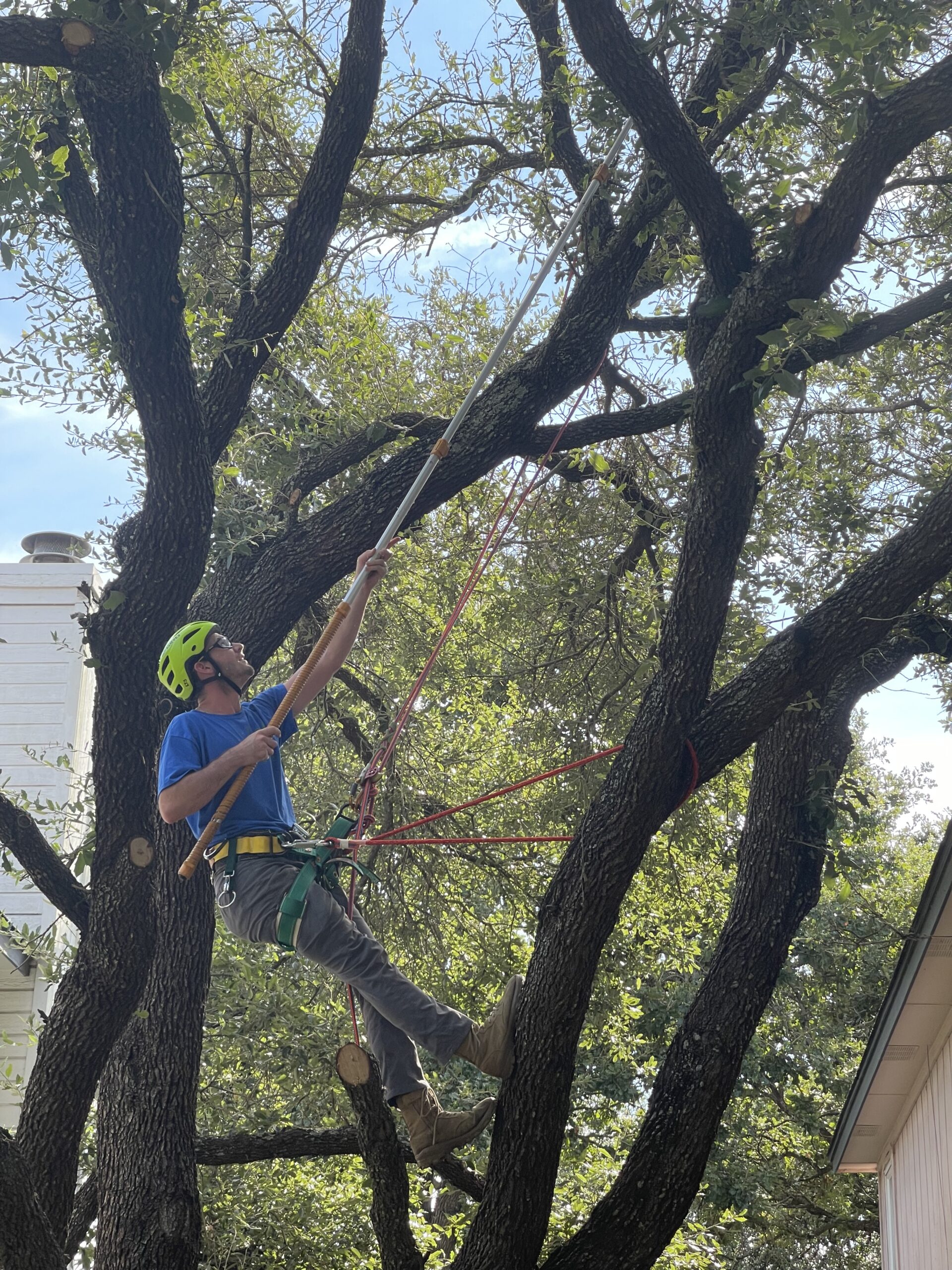
Emergency Tree Removal: How Fast Can You Get Help in Central Texas?
It's 2 AM. You hear a loud crack and then a crash. A tree just fell on your house. Or maybe it's leaning dangerously against your roof after tonight's storm. What do you do?
Tree emergencies don't wait for business hours. When a tree threatens your home or business, blocks access, or creates immediate danger, you need emergency tree removal fast.
But how fast can you actually get help? What should you do while you wait? And how do you know if your situation is really an emergency?
This guide answers everything homeowners, property managers, and business owners need to know about emergency tree removal in Central Texas.
What Qualifies as a Tree Emergency?
Not every tree problem requires immediate emergency response. Understanding the difference saves you money and helps you make the right call.
True Tree Emergencies
These situations require immediate emergency tree removal:
Tree on a Structure - A tree that has fallen on your home, business, garage, shed, or any building. This creates immediate safety risks and often causes ongoing damage as long as the tree remains.
Tree Blocking Critical Access - When a fallen tree blocks your driveway, main entrance, fire exits, or emergency vehicle access. For businesses, this can mean lost revenue. For homes, it can prevent you from leaving for work or emergencies.
Hanging Branches - Large branches hanging precariously after a storm, often called "widow makers." These can fall without warning and cause serious injury or property damage.
Leaning Tree Threatening to Fall - A tree that suddenly leans after a storm or has exposed roots and appears ready to fall on your home, vehicle, fence, or high-traffic areas.
Downed Power Lines - Any tree or branch tangled with power lines creates an extreme hazard. Never approach these situations yourself. Call your utility company first, then emergency tree removal services.
Storm Damage Creating Immediate Danger - Partially fallen trees caught in other trees, major trunk splits, or trees blocking roads during active weather events.
Urgent But Not Emergency
Some situations need quick attention but aren't immediate emergencies:
Dead trees that haven't fallen yet
Trees showing signs of disease or decay
Large branches that need removal but aren't hanging
Trees too close to your home or business that need removal soon
Root damage causing foundation concerns
These situations need professional assessment within days, not hours. They're important but don't require emergency tree removal rates.
How Fast Can You Get Emergency Tree Removal?
Response times for emergency tree removal depend on several factors.
Typical Response Times in Central Texas
During Major Storms - When widespread storm damage occurs, response times can be 4-24 hours. Every tree service in the area gets flooded with calls from both homeowners and businesses. Companies prioritize based on safety risk and when calls came in.
Individual Emergencies - For isolated incidents outside major weather events, professional emergency tree removal companies typically respond within 1-4 hours. Some offer same-day emergency service during business hours.
Overnight Emergencies - True 24/7 emergency tree removal services can respond any time, though overnight calls may take longer as crews need to be contacted and mobilized.
What Affects Response Time
Several factors determine how quickly you get help:
Severity of the Emergency - A tree actively on fire or on an occupied home or business gets priority over a tree blocking a secondary driveway.
Weather Conditions - Active storms, lightning, or high winds prevent crews from working safely. You may need to wait until conditions improve.
Time of Day - Calls during business hours typically get faster response than middle-of-the-night emergencies.
Your Location - Properties in Round Rock, Georgetown, Austin, Cedar Park, and Leander typically get faster service than more remote areas.
Company Availability - During peak storm season or after major weather events, all tree services are busy. Companies with larger crews can respond faster.
What to Do While Waiting for Emergency Tree Removal
The time between when disaster strikes and when help arrives can feel endless. Here's what you should do.
Immediate Safety Steps
Evacuate the Danger Zone - Move everyone away from the fallen tree or hazardous area. Keep people at least 50 feet away from hanging branches or leaning trees.
Check for Power Lines - Never approach a tree touching power lines. Call your utility company immediately and keep everyone far away from the area.
Document the Damage - Take photos and videos from safe distances. This helps with insurance claims and helps the tree service understand what they're responding to.
Secure the Area - Use caution tape, cones, or barriers to keep people away from the hazard. Post someone to watch the area if it's near high-traffic zones.
Turn Off Utilities If Needed - If the tree damaged your home or building, you may need to shut off water, gas, or electricity to prevent additional damage.
What NOT to Do
Don't Attempt DIY Removal - Emergency tree situations are extremely dangerous. Trees under tension can snap violently. Leave it to professionals with proper equipment and training.
Don't Cut Anything Yourself - Even small branches can be under extreme pressure. What looks safe can cause serious injury when cut.
Don't Go on Your Roof - Don't climb onto your roof to assess damage or try to move branches. Wait for professionals.
Don't Touch Power Lines - Even if lines appear dead, they can be energized. Always assume power lines are live and dangerous.
Contact Your Insurance Company
Call your insurance company as soon as it's safe to do so. Many policies cover emergency tree removal when trees damage structures. Document everything before emergency tree removal begins.
Ask your insurance company:
Is emergency tree removal covered?
Do you need pre-approval before work begins?
What documentation do they need?
Should you get multiple quotes or can you proceed immediately?
Some policies allow emergency work without pre-approval when safety is at risk. Others require documentation first.
What to Expect During Emergency Tree Removal
Understanding the process helps you prepare and know what questions to ask.
Initial Assessment
When the emergency tree removal crew arrives, they will:
Evaluate Safety Risks - The crew chief assesses hazards including power lines, structural damage, and tree stability.
Develop a Removal Plan - They determine the safest approach to remove the tree without causing additional damage.
Identify Equipment Needs - Different situations require different equipment. They'll determine if they need cranes, bucket trucks, or specialized rigging.
Provide Cost Estimate - Emergency work costs more than scheduled work. Get a clear estimate before work begins, though some immediate safety work may need to start right away.
The Removal Process
Emergency tree removal follows a systematic approach:
Securing the Area - Professional crews set up a work zone and ensure no one enters the danger area during emergency tree removal.
Rigging and Support - For trees on structures, they use ropes and rigging to control how pieces come down and prevent additional damage.
Strategic Cutting - They remove the tree in sections, starting with branches and working toward the trunk. This controlled approach minimizes further damage.
Cleanup - Emergency services focus on removing the immediate hazard. Full cleanup and debris removal may be scheduled for later.
Timeline Expectations
Emergency tree removal timing varies significantly:
Simple Removals - A straightforward fallen tree might be removed in 2-4 hours.
Complex Situations - Trees tangled in power lines, on structures, or in difficult positions can take 6-12 hours or multiple days.
Multi-Stage Removal - Some emergencies require utility companies to disconnect power first, adding time to the process.
Emergency Tree Removal Costs
Emergency work costs more than scheduled tree service. Understanding why helps you budget and avoid sticker shock.
Why Emergency Services Cost More
After-Hours Response - Crews working nights, weekends, or holidays command premium rates.
Immediate Mobilization - Companies must drop other work and deploy crews immediately.
Higher Risk - Emergency situations are more dangerous, requiring additional safety measures and experienced crews.
Equipment Costs - Mobilizing cranes, bucket trucks, and specialized equipment on short notice costs more.
Uncertain Conditions - Emergencies involve unknown factors that make the work more complex.
Typical Emergency Tree Removal Costs
Costs vary widely based on tree size, location, and complexity:
Small to Medium Trees - $800-2,500 for emergency removal Large Trees - $2,500-7,000+ depending on complexity Trees on Structures - $3,000-10,000+ due to the need for careful rigging and potential structural concerns Crane Work - Add $1,500-3,000+ when cranes are required
These are rough estimates. Your actual cost depends on your specific situation.
Insurance Coverage
Many insurance policies cover emergency tree removal when:
The tree damages a covered structure
The tree blocks necessary access to your property
Storm damage causes the tree failure
Check your policy and document everything. Read more about how Emergency tree removal companies can often work directly with insurance companies.
Choosing an Emergency Tree Removal Company Before You Need One
The worst time to choose an emergency tree removal company is when you're in an emergency. Do this research now.
What to Look for in Emergency Services
24/7 Availability - Verify they actually answer phones after hours, not just have an answering service.
Fast Response Time - Ask about typical response times for emergencies in your area.
Proper Insurance - Confirm they have current liability and workers' compensation insurance. Emergency work is dangerous, and you need protection.
ISA Certification - ISA Certified Arborists have the training to handle complex emergency situations safely.
Equipment Access - Companies with their own cranes and specialized equipment can respond faster than those who need to rent equipment.
Local Experience - Companies familiar with Central Texas weather patterns and common emergency situations work more efficiently.
Questions to Ask Before an Emergency
Contact potential emergency tree removal companies now and ask:
Do you offer true 24/7 emergency response?
What's your typical response time for emergencies?
Do you have crews available or do you contract out emergency work?
What equipment do you own versus rent?
Can you work with insurance companies directly?
Do you have experience with trees on structures?
Save contact information for 2-3 qualified companies. When an emergency happens, you'll know who to call.
Preventing Tree Emergencies
The best emergency tree removal is the one you never need. Proactive tree care prevents most emergencies.
Regular Tree Maintenance
Annual Inspections - Have an ISA Certified Arborist assess your trees yearly. They can identify problems before they become emergencies.
Proper Pruning - Regular tree trimming removes dead branches and corrects structural problems that could lead to failure.
Disease Treatment - Catching and treating tree diseases early prevents trees from becoming hazardous.
Storm Preparation - Before storm season, remove dead branches and address trees with structural problems.
Warning Signs to Watch
Between professional inspections, watch for these warning signs:
Dead or hanging branches
Cracks in the trunk or major limbs
Leaning that wasn't there before
Exposed roots or soil heaving around the base
Large amounts of deadwood in the canopy
Fungus growing on the trunk
Sudden leaf loss or discoloration
Any of these signs mean you should call for an assessment before an emergency develops.
High-Risk Situations
Some trees pose higher emergency risks:
Trees Near Structures - Trees within falling distance of your home, garage, shed, or business need more frequent assessment.
Trees with Previous Damage - Trees that survived storms but have visible damage need professional evaluation.
Old or Large Trees - Mature trees require more attention as they age and become more susceptible to failure.
Trees in Clay Soil - Central Texas clay soil creates unique stresses during drought and wet periods that can destabilize trees.
Storm Season Preparation
Central Texas weather can be severe. Preparing before storm season reduces emergency tree removal risks.
Before Storm Season
Schedule Inspections - Have your trees assessed before spring storm season arrives.
Remove Dead Wood - Get dead branches removed before high winds do it for you.
Address Problem Trees - If an arborist recommends removal, do it before storm season, not after.
Know Your Trees - Understand which trees on your property are highest risk so you can monitor them during storms.
During Severe Weather
Stay Inside - Never go outside during severe weather to check on trees.
Monitor Problem Trees - If safe to do so, watch known problem trees from inside during storms.
Document Damage - After the storm passes and it's safe, photograph any damage immediately.
Call Quickly - After major storms, tree services get overwhelmed. Call as soon as you identify a problem.
Questions Homeowners and Property Managers Ask About Emergency Tree Removal
Can I wait until morning to call about a fallen tree?
If the tree creates immediate danger or is on a structure, call immediately. If it's down but not threatening anything, calling in the morning is fine. When in doubt, call and let the professionals assess the urgency.
Will emergency tree removal damage my property more?
Professional crews use rigging and specialized techniques to minimize damage. Some additional impact may occur, but it's far less than what would happen without professional removal.
How long does emergency tree removal take?
Simple removals take 2-4 hours. Complex situations involving structures or power lines can take much longer, sometimes multiple days.
Do I need multiple quotes for emergency tree removal?
When safety is at risk, time matters more than price shopping. Choose a reputable, insured company and proceed. You can document everything for insurance purposes.
What if my insurance doesn't cover it?
You're still responsible for removing hazards from your property. Emergency tree removal protects people and prevents additional damage, which often costs more than removal.
Can I remove parts of the tree myself to save money?
Never attempt to remove any part of a tree in an emergency situation. Trees under tension or in unstable positions are extremely dangerous, even for small branches.
Finding Reliable Emergency Tree Removal in Central Texas
When you need emergency tree removal, every minute matters. But you still need qualified professionals who will do the job safely and correctly.
What Makes Emergency Tree Removal Different
Emergency work requires:
Experience handling high-stress situations
Proper equipment ready to deploy immediately
Insurance coverage for dangerous work
Training in rigging and complex removals
Ability to work safely in challenging conditions
Not every tree service is equipped to handle true emergencies. Choose companies that specialize in emergency response.
Red Flags to Avoid
Even in emergencies, watch for these warning signs:
Won't provide proof of insurance
Can't give you a clear plan for removal
Pressure you to sign before explaining the work
Lack proper equipment for the situation
Can't answer questions about their experience
Your emergency is stressful enough. Don't add to it by hiring unqualified companies.
The Bottom Line on Emergency Tree Removal
Tree emergencies happen. Storms roll through Central Texas regularly. Trees age and fail. Knowing what to expect and having a plan reduces stress when emergencies occur.
Key points to remember:
True emergencies need immediate response
Professional companies can typically respond within hours
Emergency work costs more than scheduled work, but it's necessary
Prevention through regular maintenance stops most emergencies before they happen
Choose your emergency tree removal company before you need them
Don't wait for disaster to strike. Identify qualified emergency tree removal companies now. Schedule regular tree maintenance. Watch for warning signs. These steps protect your property and ensure you know exactly who to call when emergencies happen.
If you have trees near structures, dead wood in your canopy, or trees showing signs of stress, don't wait for an emergency. Professional assessment and proactive care prevent most tree emergencies before they happen.