Spring Tree Trimming in Central Texas: What You Need to Know Before Storm Season
“This is exactly why I will be using Leaf Tree in the future for professional pruning and upkeep…Jeff is not only extremely knowledgeable, but passionate about tree health and wellness. I highly recommendation using Leaf Tree for all your tree needs!”
– Tim (Google Review)

Jeff Hempel
TX-4962A
ISA TRAQ
Over 90 5-Star Reviews On Google!
tree-maintenance
austin-tx, round-rock-tx, tree-maintenance, tree-services
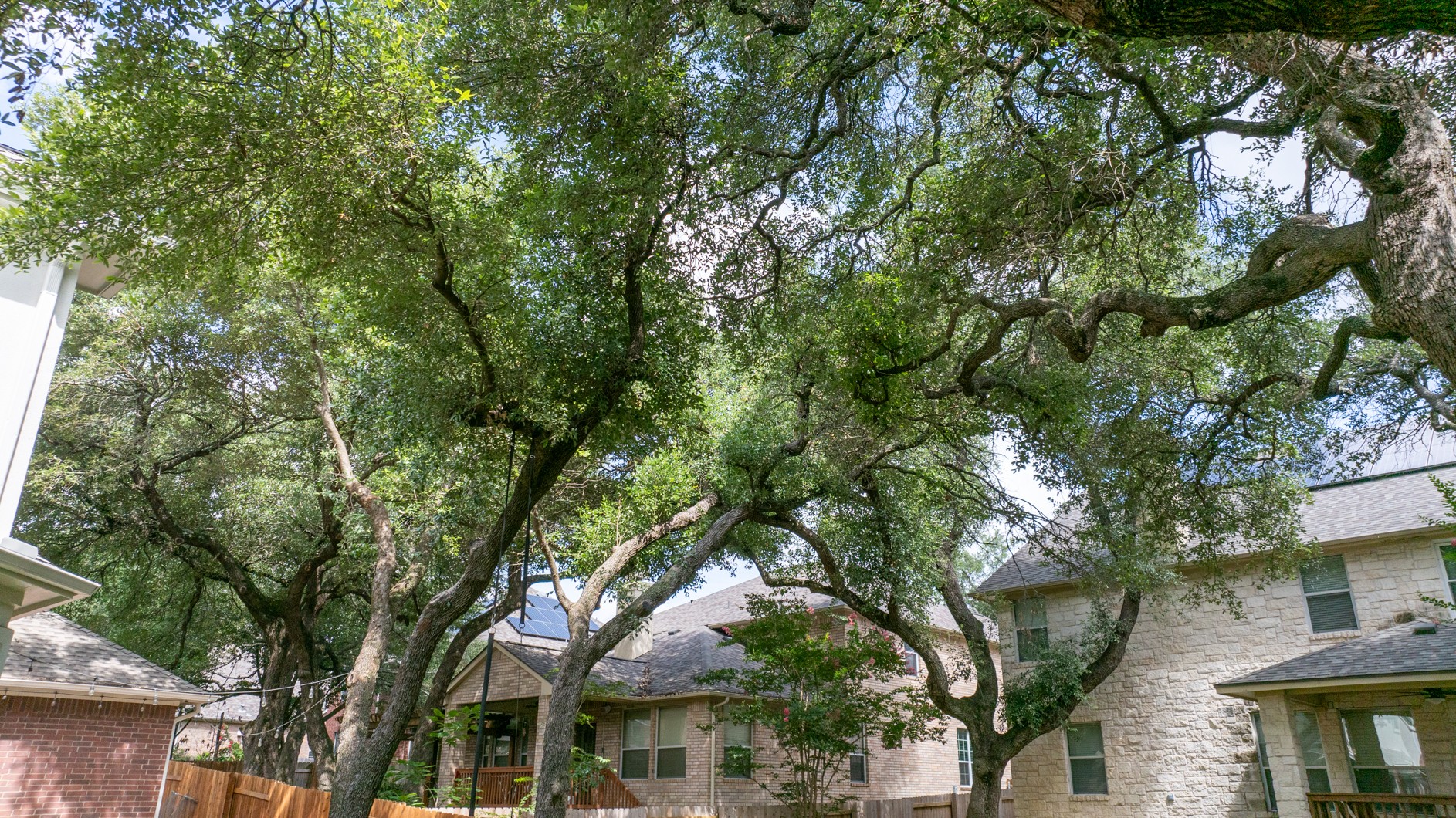
Spring arrives in Central Texas and suddenly your trees look different. What was bare and manageable all winter is now full of leaves, and problems you didn't notice are suddenly impossible to ignore. That dead branch you walked past all winter? Now it stands out against new green growth. Those limbs near your roof? They're actually touching it. Your overgrown tree? It's blocking half your view.
This is exactly why spring tree trimming is critical in Central Texas. Spring doesn't just bring beautiful weather and blooming flowers. It brings severe storms. April through June is peak storm season here, and the trees you ignored all winter become serious hazards when spring storms hit. Understanding what spring tree trimming should address, and scheduling it now, protects your property before the first thunderstorm rolls through.
Why Spring Makes Tree Problems Obvious
While tree work happens year-round, spring is when most property owners suddenly notice issues that were there all along. Winter trees are easy to overlook. Bare branches blend into the sky. Problems hide. You focus on other things. Then spring arrives, trees leaf out, and issues become obvious.
Dead wood that was barely noticeable in winter now stands out starkly against healthy green growth. Branches you thought were "close" to your roof are actually rubbing against shingles. That dense canopy you figured was fine now blocks your entire view and looks ready to catch serious wind. Low-hanging branches that seemed manageable are now clearly in the way.
Spring forces you to confront reality: your trees need attention. The question isn't whether you need spring tree trimming. It's when you want to schedule it, ideally before storms arrive.
The 7 Critical Problems Spring Tree Trimming Addresses
1. Dead Wood You Didn't Notice All Winter
Dead branches are easiest to spot in winter when trees are bare. But most people don't spend winter walking their property looking up at trees. Then spring comes, healthy branches produce leaves, and dead wood becomes glaringly obvious by contrast.
Dead wood is the highest priority for spring tree trimming. These branches can fall without warning, even without storms. They're structurally compromised, often diseased or damaged, and they pose immediate danger to anyone or anything below them. During Central Texas storms with high winds, dead branches become projectiles that can damage vehicles, structures, and cause serious injuries.
The longer dead wood stays in your trees, the more dangerous it becomes. Wood continues deteriorating, attachment points weaken, and the risk of failure increases. Spring tree care should always start with dead wood removal—it's the most urgent issue spring reveals.
2. Trees Too Close to Your Roof and Structures
This is the problem most homeowners discover in spring: trees are way closer to structures than they realized. All winter, bare branches didn't seem that close. Then leaves fill in, branches extend further under the weight, and suddenly you realize your tree is touching your roof.
Trees near structures create multiple problems. Branches rubbing against roofs damage shingles, creating entry points for water and eventually causing leaks. Overhanging branches provide highways for pests—squirrels, raccoons, and rats use tree branches to access your attic and walls. During storms, wind pushes branches into structures with significant force, breaking windows, damaging siding, and punching holes in roofs.
Proper clearance from structures should be 6 to 10 feet. If your trees don't have this clearance, spring tree trimming needs to address it now, before storm season gets serious. Once storms start, branches that are merely "close" become battering rams against your home.
3. Overgrown Canopies That Catch Too Much Wind
Dense, overgrown tree canopies look impressive when they leaf out in spring. They also represent significant storm damage risk. The thicker and fuller a canopy, the more wind it catches. More wind resistance means more force on the trunk and root system during storms. This force can snap large branches, split trunks, or even topple entire trees.
Overgrown canopies also prevent air circulation through the tree. This dense growth creates environments where fungal diseases thrive. Poor air circulation keeps moisture trapped in the canopy, promoting rot and decay that weaken branches from the inside.
Spring tree trimming should include crown thinning for overgrown trees. Proper thinning removes select branches throughout the canopy, allowing wind to pass through rather than pushing against a solid wall of leaves. This significantly reduces storm damage risk while maintaining the tree's natural shape and health. Crown thinning also allows more sunlight to reach your lawn and landscape below, improving overall yard health.
4. Low-Hanging Branches Over Driveways and Walkways
Low-hanging branches are another spring surprise. Branches that seemed fine in winter now clearly interfere with vehicles, pedestrians, and activities. Worse, spring growth will make them hang even lower as new leaves add weight and branches extend.
These branches create safety hazards and daily nuisances. They scrape the tops of vehicles, hit people in the face when walking, and can damage delivery trucks or trailers. They also limit visibility around your property, creating blind spots that can be dangerous.
Spring tree care should include raising the canopy over driveways, walkways, and parking areas. This work is easiest to do now, before branches grow even more during the active growing season. Waiting until summer means dealing with more growth and potentially more severe problems.
5. Crossing and Rubbing Branches
When trees are bare, crossing branches are visible but don't seem urgent. Then spring arrives, leaves fill in, and you realize these branches are actively rubbing together every time wind blows. This constant friction creates wounds in the bark where diseases and pests can enter.
Crossing branches also create structural problems. The attachment points for these branches are often weak. When one branch rubs against another, it gradually weakens both branches. During storms, these weakened areas fail first. One or both branches can break, often taking additional healthy wood with them.
Proper spring tree trimming removes crossing branches before they cause significant damage. The decision about which branch to remove depends on the tree's overall structure, which branch is healthier, and what removal creates the best shape. An ISA Certified Arborist can make these assessments and ensure crossing branches are addressed properly.
6. V-Shaped Branch Attachments and Structural Weaknesses
Some tree problems aren't immediately obvious even in spring, but they're critical to address before storm season. V-shaped branch attachments, also called co-dominant stems, represent one of the most common structural weaknesses in trees.
When two branches grow up from the same point at narrow angles (forming a "V"), the attachment point is inherently weak. Unlike branches that grow at wider angles with strong attachment points, V-shaped attachments include bark that grows between the two stems. This included bark prevents strong wood-to-wood connection. The result is an attachment that looks strong but is actually prone to splitting.
During Central Texas storms, trees with V-shaped attachments often split down the middle. These splits are catastrophic—they destroy the tree and can cause massive property damage when large sections fall. Spring is the ideal time to identify these structural problems and address them through professional tree care. Depending on the situation, the solution might be removing one of the co-dominant stems, installing cables for support, or in severe cases, removing the tree entirely before it fails.
7. Winter Storm Damage You've Been Ignoring
Central Texas winters can bring ice, occasional freezes, and winter storms. These events often cause damage that seems stable enough to ignore. Cracked limbs that didn't fall, hanging branches caught in other branches, or partially split trunks that held through winter all seem manageable—until spring arrives.
As trees leaf out, the weight on branches increases significantly. Branches that were cracked but stable in winter can fail under the added weight of spring leaves. Hanging branches that seemed secure can drop without warning. Splits that held through winter can widen as the tree begins active growth.
Spring tree trimming must address any winter damage before it becomes a bigger problem. What was a manageable situation in February becomes an emergency in April. Storm damage doesn't heal itself—it gets worse. Professional assessment and correction now prevents catastrophic failure later.
Benefits of Spring Tree Trimming Over Waiting
While quality tree care can happen any time of year, spring offers some practical advantages for property owners. Here's why scheduling spring tree trimming makes sense:
You address issues before storm season peaks. April through June brings severe thunderstorms, high winds, hail, and occasionally tornadoes to Central Texas. If you have already weak or damaged branches, addressing them before storms arrive makes sense. Trees with existing problems are more likely to have issues during severe weather.
Trees are easier to assess before full leaf out. Early spring, when leaves are just emerging, provides better visibility for arborists to see exactly what they're working on. By late spring and summer, full canopies make it harder to see structural issues. Better visibility means more thorough assessments.
Scheduling is typically easier in early spring. Once spring storms start hitting and summer heat arrives, tree services get busier. Schedule spring tree care in March or early April and you typically get on the calendar quickly. Wait until May or June and availability may be more limited.
Preventive maintenance costs less than emergency work. Storm damage removal requires immediate response, often outside normal hours, with more difficult working conditions. Scheduled maintenance allows for better planning and typically lower costs than emergency calls.
What Complete Spring Tree Trimming Should Include
Effective spring tree care isn't just about cutting a few branches. Comprehensive spring tree trimming addresses multiple aspects of tree health and safety:
Dead wood removal is always priority number one. Every piece of dead wood in your trees represents a potential projectile during storms. Complete dead wood removal throughout the entire tree provides immediate risk reduction.
Structural clearance from buildings must be established. All branches should be at least 6 to 10 feet away from your roof, walls, and other structures. This clearance prevents rubbing damage, eliminates pest access routes, and ensures branches can't impact structures during storms.
Crown thinning reduces wind resistance in overgrown trees. Proper thinning removes select branches throughout the canopy while maintaining the tree's natural shape. This allows wind to pass through rather than pushing against a solid mass of leaves.
Removing crossing and rubbing branches prevents ongoing damage and structural failures. Every set of crossing branches should be assessed, and one branch should be removed based on which creates better overall tree structure.
Raising the canopy over walkways, driveways, and access points improves safety and functionality. Low-hanging branches should be removed to appropriate heights based on use, typically 8 feet over walkways and 14 feet over driveways.
Correcting weak attachments through pruning or support systems addresses long-term structural problems. Trees with co-dominant stems may need one stem removed or may require cabling to support the weak attachment.
Timing Your Spring Tree Trimming in Central Texas
When exactly should you schedule spring tree care? The answer depends on several factors, but earlier is generally better than later.
Early spring—March through early April—is ideal for most spring tree trimming in Central Texas. Trees are beginning to wake up, but they haven't put full energy into new growth yet. Arborists can still see structure relatively clearly. Storm season hasn't reached its peak ,and scheduling is still relatively easy to get.
Mid to late spring—late April and May—is still acceptable but becoming more urgent. Storm season is in full swing. Trees are fully leafed out. Every week that passes increases the risk that storms will hit before your trees are properly maintained.
Important exception for oak trees: Oaks should not be trimmed from February through June unless there's an emergency situation. This timing avoids the period when beetles that can spread Oak Wilt are most active. For oaks, either trim in early February (before the exclusion period) or wait until July. However, dead wood removal and emergency situations always take priority over timing recommendations—a hazardous oak branch must be removed regardless of the month.
The key message: don't wait. The sooner you schedule spring tree trimming, the better protected your property will be before peak storm season arrives.
DIY vs. Professional Spring Tree Trimming
Some tree work is reasonable for homeowners to tackle. Much of it requires professional expertise and equipment. Understanding the difference keeps you safe and ensures proper results.
When you can DIY:
Small branches under 2 inches in diameter
At ground level or easily reachable with a small ladder
Nowhere near power lines
You understand proper pruning cuts (improper cuts damage trees even on small branches)
When you must use professionals:
Anything near power lines (never attempt this yourself)
High branches requiring ladders or climbing
Large branches (proper cutting technique prevents tree damage)
Any structural concerns or uncertainties
Trees near buildings or valuable property
Your Spring Storm Preparation Checklist
Take action now to assess your trees and schedule necessary spring tree trimming:
Walk your entire property after the trees leaf out. You can't address problems you haven't identified. Look at every tree from multiple angles. Pay special attention to trees near structures, over parking areas, and near power lines.
Look up and identify dead wood. Dead branches stand out against healthy green growth in spring. Make note of every dead branch you can see, especially large ones high in the tree.
Check clearance from all structures. Walk around your house, garage, sheds, and other buildings. Note every place where branches are within 10 feet of structures.
Identify low-hanging branches. Walk your driveways and pathways. Note where you have to duck or where branches are close to vehicles.
Look for dense, overgrown canopies. Step back and look at the overall shape of your trees. Trees with extremely dense canopies that look like solid masses of leaves need thinning.
Note any damage or structural concerns. Look for cracked branches, splits in trunks, V-shaped attachments, leaning trees, or anything else that looks concerning.
Schedule assessment with an ISA Certified Arborist. Once you've identified potential issues, schedule a professional assessment to confirm what needs to be done and identify problems you might have missed.
Understanding the Costs of Delayed Maintenance
Property owners often ask about the financial difference between proactive tree care and waiting until problems become urgent. The numbers tell a clear story.
Emergency storm removal costs significantly more than scheduled spring tree trimming. When storms bring down branches or entire trees, you need immediate service. Emergency response, after-hours work, and difficult working conditions all command premium pricing. Preventive trimming might cost $800-$1500 while the same work done as emergency removal could cost $2,000 to $5000.
Property damage from fallen branches adds to overall costs. Roof repairs, siding replacement, vehicle damage, broken fences, and destroyed landscaping all come with price tags. Your insurance deductible alone might exceed what preventive trimming would have cost. And insurance doesn't cover neglect. If obvious hazards were ignored, claims may be denied.
Lost trees represent significant investment. Mature trees add value to your property. They provide shade that reduces cooling costs, improve air quality, increase curb appeal, and create habitat for wildlife. A tree that could have been maintained properly, but instead fails, is a loss that takes decades to replace.
Safety concerns beyond financial costs. The most important consideration isn't financial. Falling branches can cause serious injuries. Property damage is fixable. Protecting your family's safety is what matters most.
Taking Action on Spring Tree Trimming
Spring has arrived. Your trees have revealed issues that need attention. Storm season runs from April through June in Central Texas. Now is a good time to address tree problems you've identified.
Professional spring tree trimming addresses every issue spring revealed: dead wood, overgrown canopies, branches too close to structures, crossing branches, and structural weaknesses. Comprehensive tree care protects your property, your family, and your trees.
Schedule your spring tree trimming assessment when it works for your schedule. Walk your property, identify issues, and contact an ISA Certified Arborist for professional evaluation. You can contact us to schedule an appointment. Addressing tree problems proactively makes more sense than waiting for them to become emergencies.
What Our Clients Are Saying
“Jeff, a certified arborist with extra training and lots of experience in the area, fit me into his schedule and showed up promptly, on very short notice. We did a walk-through of the property, advising on what trimming was most beneficial and helping me understand things to look for as potential problems with tree health. We picked a few trees that merited attention and a proposal for trimming followed. When the crew came out, at the expected time, we confirmed the work to be done before they started. Trimming was well done, quickly, per my requests. Tree canopies look noticeably better, appreciate their attention to balancing their cuts.”
– Mark
“I had a tree health consult with Jeff and it was incredibly informative and comprehensive. He told us all about our main oak that we want to keep healthy and suggested what would help keep the tree healthy and safe. He was not at all pushy on selling future service, but answered every question we had and did not rush through anything. This is exactly why I will be using Leaf Tree in the future for professional pruning and upkeep. It is entirely evident that Jeff is not only extremely knowledgeable, but passionate about tree health and wellness. I highly recommendation using Leaf Tree for all your tree needs!”
– Tim
“Jeff with Leaf Tree Service responded very quickly to our need. We were under a time frame imposed on us by the city. Jeff's crew was able to fit us in and prevented us from being fined. They took the extra steps to ensure the trees would not sprout up & ground the stumps to ensure mowers could keep area maintained. The city inspector wrote an email praising the quality of the job. The care in which jeff's crew took while clearing this brush was amazing & the remaining trees in this area look fantastic. Highly recommend Leaf Tree Service. In fact I am using them each quarter to maintain the other trees on our property. Quality work at a fair price, which is hard to find these days.”
– Rick
Where We're Located
1510 Sam Bass Rd,
Round Rock, TX 78681
(512) 670-6766
info@leaftreeservicesatx.com